
Rib Pain and Costovertebral Joint ChiropractorAdelaide
Sharp, catching mid-back or chest-wall pain that flares with a deep breath, cough, or twist may involve a costovertebral joint (where a rib meets the spine). At Stapleton Chiropractic, Dr Sam Johnson (Chiropractor) offers evidence-informed assessment and conservative care for adult rib pain. $69 initial consultation. No referral needed. Any chest pain with red-flag features warrants urgent medical review first.

Does this sound familiar?
Common rib pain patterns we hear. Tap a card for a plain-English explanation.
"A sharp stab between my shoulder blades every time I take a deep breath."
"I had a bad cough for two weeks, and now my rib feels bruised and catches when I twist."
"Something popped mid-row at the gym and now I cannot twist without a stab in the back."
What Rib Joint Pain Looks Like
Mechanical costovertebral or costotransverse joint pain is typically one-sided, sharp, reproducible on palpation or rib springing, and flares with a deep breath, cough, sneeze, or twist. Chest-wall pain with exertional, cardiac, or pulmonary features is a different clinical situation and warrants urgent medical review first.
Typical features of mechanical rib-related pain include:
- Location usually one-sided, at the posterolateral or anterolateral chest wall along a single rib line, or centred at the mid-back between the shoulder blades.
- Aggravators including a deep breath, cough, sneeze, laugh, twisting, reaching overhead, lying on one side, or sudden loaded rotation such as a gym row or golf swing.
- Easing often with offloaded positions, breath control, and avoiding the specific twisting or reaching movement that provokes it.
- Reproducible on palpation: springing the thoracic segment or the rib angle may reproduce the familiar pain, which is one of the features that points towards a mechanical source rather than a visceral or cardiac one.
- Differentiation point: central crushing chest pain, pain radiating to the jaw or left arm, pain with exertion, or pain with sweating, nausea, or shortness of breath is not a mechanical pattern and warrants calling 000 or attending an emergency department.
How Rib Pain Differs From Similar Conditions
Chest-wall and rib-related pain has several possible sources. A structured assessment may help clarify whether it is a posterior rib joint, an anterior cartilage junction, a slipping rib at the costal margin, an irritated nerve, or a referred visceral or cardiac pattern.
| Feature | Costovertebral joint | Costochondritis / Tietze | Slipping rib | Intercostal neuralgia | Visceral referral | Cardiac |
|---|---|---|---|---|---|---|
| Typical location | Posterior or posterolateral mid-back, may wrap along a rib line | Anterior chest wall at costochondral junctions | Lower anterolateral chest wall or lateral costal margin | Strip-like band along one intercostal space | Referred from gallbladder, pleura, diaphragm, or upper abdomen | Central chest; may radiate to jaw, left arm, or between shoulder blades |
| Character | Sharp, catching, position-dependent | Sharp or aching at the junction, reproducible on palpation | Sharp, catching, "something slips or pops" | Burning, shooting, electric | Dull, deep, or colicky; poorly localised | Crushing, pressure, heavy; often not reproducible on palpation |
| Breath-related | Often yes; sharp with deep inhale, cough, or sneeze | Sometimes; palpation more reliably provocative than breath | Often worse with twist; click may accompany | Yes if the nerve is sensitised | May worsen with inspiration if pleural | Usually not breath-related in ACS; pericarditis is pleuritic |
| Reproducible on palpation | Yes; rib springing reproduces familiar pain | Yes; focal tenderness at costochondral junction | Hooking manoeuvre under costal margin reproduces pain and click | Yes along the nerve strip | Variable | Usually not |
| Typical trigger | Twist, cough, overhead reach, sustained slump, loaded rotation | Cough, deep breath, lying prone, palpation | Twisting, sideways bending, coughing, pressing the costal margin | Coughing, pressure, tight clothing, trunk movement | Meal timing (gallbladder), position (pleurisy), diaphragm movement | Exertion, emotional stress |
| Red flags | Usually absent | Usually absent; escalate if large fluctuant swelling | Usually absent; consider fracture if cough severe | Check for vesicular rash (shingles), trauma, motor deficit | Fever, jaundice, haemoptysis, vomiting | Sweating, nausea, dyspnoea, jaw or arm radiation; call 000 |
Adapted from Stochkendahl & Christensen 2010; Turcios 2017. Clinical assessment is always personalised and individual presentations vary.
What the Research Suggests
Research suggests mechanical rib-related pain often responds to conservative manual therapy combined with graded movement and breathing guidance, once cardiac, pulmonary, and visceral causes have been excluded. The studies below summarise what the research suggests, not what any individual person will experience.
Heneghan 2016 · Manual Therapy
The thoracic spine and rib region is clinically common yet under-researched
Commentary framing the thoracic spine and costovertebral articulations as the "Cinderella" of the spine. The region is a common source of mid-back and chest-wall pain, and rigorous assessment is a clinical priority because chest-wall pain overlaps with cardiac, pulmonary, and visceral presentations.
Read the commentary →Turcios 2017 · Paediatric Respiratory Reviews
Slipping rib syndrome may be under-diagnosed as a cause of anterolateral chest-wall pain
Narrative review of slipping rib syndrome (hypermobility of the lower false ribs 8 to 10). Research suggests it is frequently mistaken for costochondritis, gallbladder pathology, or abdominal wall strain. A hooking manoeuvre may reproduce the familiar pain plus a palpable click.
Read the review →Walser 2009 · J Manual Manipulative Therapy
Thoracic spine manipulation may help manage mechanical mid-back pain (short-term)
Systematic review and meta-analysis of randomised trials. Pooled results suggest short-term improvements in pain and function. Thoracic manipulation applied over the thoracic segments also mobilises the associated costovertebral and costotransverse articulations. Individual responses vary.
Read the meta-analysis →Stochkendahl 2010 · Medical Clinics of North America
Chest-wall pain must be cleared of cardiac, pulmonary, and visceral causes first
Review of musculoskeletal chest-wall disorders. Features that warrant urgent medical review include exertional pain, pain radiating to the jaw or left arm, pain with sweating or nausea, new shortness of breath, haemoptysis, pleuritic pain with fever, or pain following major trauma.
Read the review →How Chiropractic Care May Help
Research suggests conservative manual therapy, combined with graded movement and breathing guidance, may help manage mechanical rib-related pain, once cardiac, pulmonary, and visceral causes have been excluded. Care is tailored to how your thoracic spine, ribs, and intercostal muscles respond to assessment. Individual responses vary.
GP clearance for chest pain first. Any chest-wall pain with exertional features, radiation to the jaw or left arm, sweating, nausea, new shortness of breath, or haemoptysis is not appropriate for conservative care until it has been triaged medically. If any of those features apply, please call 000 or attend your nearest emergency department before booking a chiropractic assessment.
Where the presentation is mechanical and red flags have been cleared, care at Stapleton Chiropractic typically includes:
- Detailed history and red flag screen including a screening conversation for cardiac, pulmonary, and visceral causes of chest-wall pain.
- Costovertebral provocation and rib-glide assessment, including thoracic segmental springing, rib-angle springing, rib-glide testing, breath-pain reproduction, and thoracic extension and rotation screening.
- Palpation of the costochondral junctions and a sweep along the intercostal spaces to differentiate posterior rib articulations from anterior chest-wall sources or an intercostal nerve strip.
- Low-force adjustment using an Activator instrument or drop-piece table where appropriate. Both are well-tolerated and suited to an irritated rib cage or a guarded thoracic spine.
- Diversified manual adjustment for patients comfortable with hands-on adjusting, applied to the thoracic spine and associated rib articulations as clinically indicated.
- Soft tissue techniques for the intercostal, paraspinal, and scapular muscles that often guard around an irritated rib articulation.
- Breathing mechanics and graded load guidance including diaphragmatic breathing cues, thoracic mobility work, and a graded return to loaded rotational tasks.
Progress is reviewed at each visit. There are no lock-in plans, and the decision to continue is always yours. If your response to care is not what we would expect, we will reassess and, where appropriate, discuss referral pathways back to your GP, to imaging, to a pain clinic, or to a colleague in another discipline.
Chiropractic vs other common approaches
| Approach | Chiropractic (here) | Physiotherapy | Remedial massage |
|---|---|---|---|
| Primary focus | Rib joint, thoracic spine, soft tissue, breathing mechanics | Movement, exercise rehab, breathing retraining | Intercostal and paraspinal muscle tension |
| Manual adjustment | Yes. Activator, drop-piece, or diversified manual | Sometimes, depending on the practitioner | No |
| Soft tissue work | Yes, alongside adjustment | Yes, alongside exercise | Yes, primary focus |
| Breathing mechanics | Yes, diaphragmatic cueing and thoracic mobility | Yes, often a core tool | Occasionally |
| Lock-in plans | No | Varies by clinic | Varies by clinic |
| Referral needed | No | No | No |
If we feel you would benefit from a different approach, we will always let you know.
Why Stapleton Chiropractic
Adult-first, evidence-informed, and family-run since 1972. No lock-in plans, clear pricing, and the decision is always yours.
Est. 1972
Over five decades on Marion Road. A Plympton Park practice your family likely already knows.
Evidence-informed
Care is guided by Cochrane reviews, thoracic manipulation meta-analyses, and current clinical research. Outcomes are discussed honestly.
No lock-in plans
Pay per visit. The decision to continue is always yours, reviewed at each appointment.
Transparent pricing
$69 initial consultation, $60 standard. All major health funds accepted with on-the-spot claiming where supported.
Red-flag screening first
Chest-wall pain is carefully screened for cardiac, pulmonary, and visceral causes before any conservative care is offered.
Low-force options
Activator instrument and drop-piece table techniques are available for patients who prefer a quieter, gentler approach.
Weekday availability
Monday to Friday 7am to 7pm, Saturday 8am to 12pm. Commuter-friendly slots on Marion Road.
What Your First Visit Looks Like
Five straightforward steps, built around red-flag screening and a careful rib-joint assessment. No paperwork marathons, no surprises.
Book online or call
Pick a time that suits. No referral needed. $69 initial consultation.
Brief intake and red-flag screen
Short history covering the pain story and a screening conversation for cardiac, pulmonary, and visceral causes of chest-wall pain.
Costovertebral provocation
Rib springing, rib-glide assessment, breath-pain reproduction, and thoracic extension screen.
Palpation sweep
Palpation of the costochondral junctions and intercostal spaces to differentiate anterior from posterior sources.
Discussion & next steps
Plain-English findings and options. If care is appropriate, we discuss it. The decision is always yours.
Ready to speak to Dr Sam?
$69 initial consultation. No lock-in plans. All major health funds accepted. Chest pain with red-flag features? Please call 000 or attend an emergency department first.
Book a ConsultationTransparent Affordable Fees
No lock-in plans, no pressure. Fees sit well below the South Australian average.
Source: Australian Chiropractors Association Consultation Fee Survey 2025 (SA data). All major health funds accepted.
Warning Signs That Warrant Urgent Medical Review
Rib and chest-wall pain can be mechanical, but it can also be cardiac, pulmonary, or visceral. If you have any of the features below, please do not wait. Call 000, present to your nearest emergency department, or see your GP urgently before pursuing conservative care.
- Chest pain with exertion, or central crushing chest pain, especially if it radiates to the jaw, left arm, or between the shoulder blades.
- Chest or rib pain with sweating, nausea, or shortness of breath (possible acute coronary syndrome).
- New sudden shortness of breath, or pleuritic pain with fever (possible pulmonary embolism or pleurisy).
- Haemoptysis (coughing up blood).
- A vesicular (blistering) rash appearing in a band along the rib (possible shingles / herpes zoster, including the pre-rash pain phase).
- Recent significant trauma (fall from height, motor vehicle incident, sporting impact). Fracture must be excluded first.
- Severe or progressively worsening pain that does not ease with rest or position change.
- Fever with rib or chest-wall pain.
- Unexplained weight loss over weeks to months, or a history of cancer.
- Upper abdominal pain radiating around the rib cage, particularly after a fatty meal (possible gallbladder).
- Breast lump, nipple change, or breast skin change accompanying the pain in anyone of any sex.
If any of these apply, contact your GP, call healthdirect on 1800 022 222, call 000, or attend your nearest emergency department. These features may indicate a condition that warrants urgent medical review, rather than a mechanical rib joint issue. Conservative chiropractic care at Stapleton can resume afterwards if it remains appropriate. When in doubt, please speak to your GP first.
Ready to Get Started? We're Ready When You Are.
Choose a time that works for you. No referral needed. If your rib pain has any red-flag features, please seek urgent medical review first.
Dr Sam Johnson (Chiropractor)
B.Sc.(Chiro), M.Chiro.(Macq)
$69
Initial Consultation
Up to 30 minutes, including full assessment
Book Your First VisitPrefer to call? (08) 8297 5277
Text: 0400 105 454 | Email: wecanhelp@stapletonchiropractic.com.au
You will receive a confirmation email with all details immediately after booking.
Still have questions?
Call the practice on (08) 8297 5277. Verity or Wendy will answer general questions, and Dr Sam can call you back if a clinical conversation is easier before booking.
(08) 8297 5277Frequently Asked Questions
Is rib pain a sign of a heart attack?
Can a rib really pop out of place?
What is the difference between costochondritis and costovertebral joint dysfunction?
What is slipping rib syndrome?
Can a chiropractor help with rib pain?
What happens at a first consultation?
How much does it cost, and do I need a GP referral?
When should I see a GP or emergency department instead of a chiropractor?
Ready to Take the First Step?
Book your initial consultation with Dr Sam Johnson (Chiropractor). No referral needed. $69 initial consultation. Chest pain with red-flag features? Please seek urgent medical review first.
Stapleton Chiropractic. Est. 1972. Clinically led by Dr Sam Johnson (Chiropractor), BSc (Chiropractic) and MChiro, Macquarie University. AHPRA-registered.
Address: 528 Marion Road, Plympton Park SA 5038 Phone: (08) 8297 5277 Hours: Mon to Fri 7am to 7pm, Sat 8am to 12pm Email: wecanhelp@stapletonchiropractic.com.au
Scope note: We focus on the assessment and conservative management of musculoskeletal conditions. We do not make claims about non-musculoskeletal conditions. Chest-wall pain with cardiac, pulmonary, or visceral red-flag features is outside the scope of conservative chiropractic care and should be triaged medically first.
What to Expect at Your First Visit
Stapleton Chiropractic is an evidence-based chiropractic practice at 528 Marion Road, Plympton Park, Adelaide (Est. 1972). An initial consultation costs $69 and includes a comprehensive 30-minute hands-on assessment. All major health funds accepted; no referral needed.
Allow up to 30 minutes for a comprehensive initial consultation. Here is how it works.
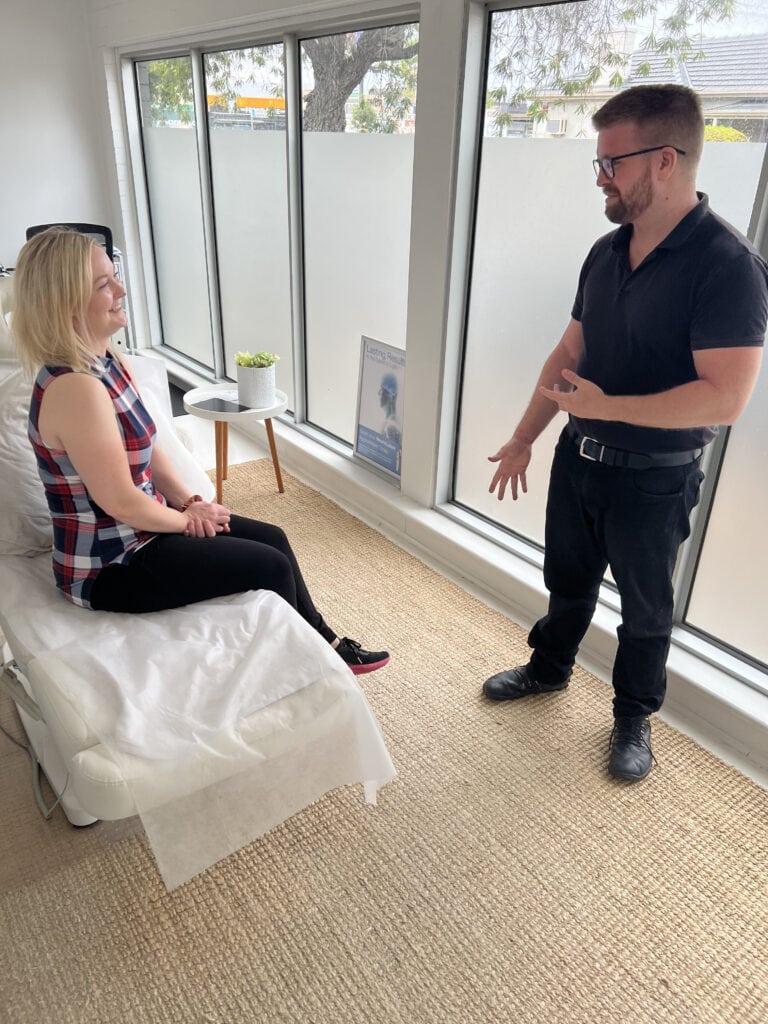
You Tell Us
We listen carefully, ask the right questions, and build a clear picture of what has been going on.
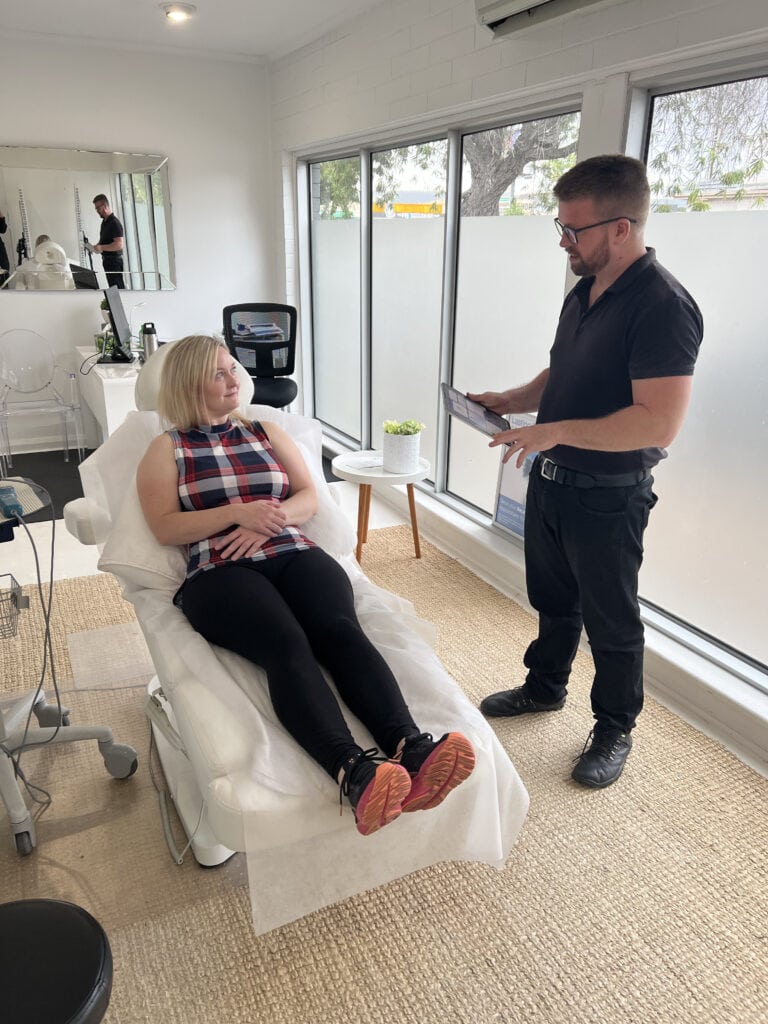
We Assess
Hands-on testing and biostructural analysis to identify what may be contributing to your concern.
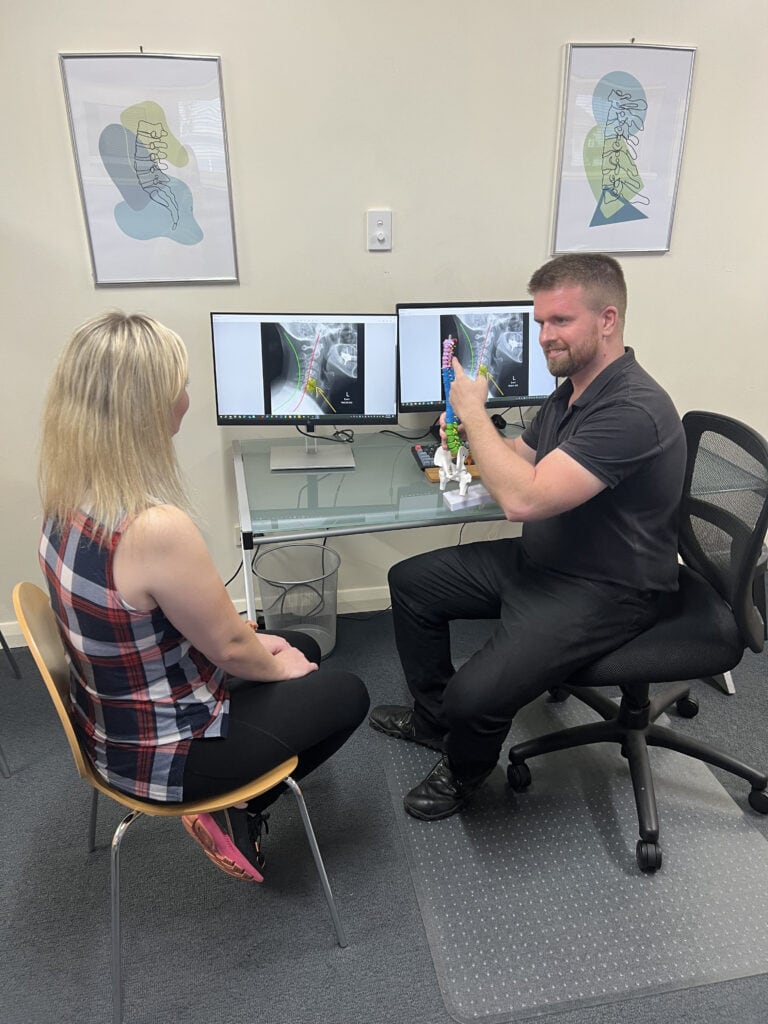
We Explain
We walk you through our findings and your options in plain language. If imaging is recommended, we will explain why and discuss your options.
X-rays are only referred for with your consent, and where eligible, may be bulk billed.*
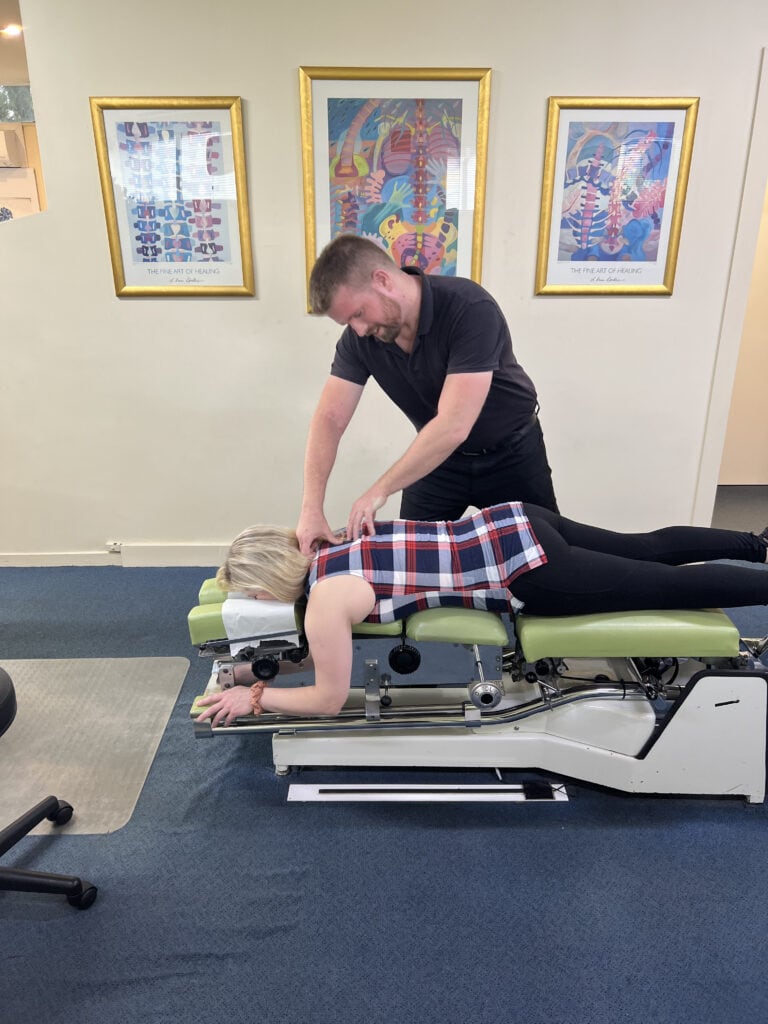
Care May Begin
Where clinically appropriate, care may begin on your first visit to help support relief.*
We offer both traditional hands-on chiropractic techniques and gentle, low-force approaches, tailored to your comfort. Care only proceeds with your consent.
Ready to Get Started?
Your first visit takes about 30 minutes. No referral needed, no lock-in plans. The decision is always yours.
Book Your First Visit*Subject to clinical assessment and suitability criteria. Bulk billing subject to eligibility criteria and clinical need.
Transparent Affordable Fees
Source: Australian Chiropractors Association Consultation Fee Survey 2025 (SA data). *Care provided where clinically appropriate, subject to assessment.
Care that fits your day
528 Marion Road, Plympton Park SA 5038
Ready to Get Started? We're Ready When You Are.
Choose a time that works for you. No referral needed.

Dr Sam Johnson (Chiropractor)
B.Sc.(Chiro), M.Chiro.(Macq)
$69
Initial Consultation
Up to 30 minutes, including full assessment
Book Your First VisitPrefer to call? (08) 8297 5277
Text: 0400 105 454 | Email: wecanhelp@stapletonchiropractic.com.au
You will receive a confirmation email with all details immediately after booking.