
Frozen Shoulder Chiropractor Adelaide | Plympton Park
Frozen shoulder, also called adhesive capsulitis, is a condition where the capsule around the shoulder joint becomes painful and tight, gradually restricting movement. It often comes on for no clear reason and tends to settle slowly over time. Evidence-informed chiropractic care from Dr Sam Johnson (Chiropractor) may help manage pain and movement, although the evidence is mixed. Individual responses vary.
Does this sound familiar?
You cannot reach behind your back any more
Doing up a bra strap, reaching a back pocket, or grabbing the seatbelt has become a sharp, guarded movement. The shoulder just will not go there.
A real loss of reach alongside pain is a common picture in frozen shoulder. A thorough assessment helps confirm what is going on and rule out other causes. Research suggests manual therapy and exercise are reasonable options that may help manage pain and movement, although the evidence is mixed (Page et al., 2014, Cochrane Database of Systematic Reviews). Individual responses vary.
The pain is worst at night and wrecks your sleep
Lying on that side is impossible, and the ache wakes you when you roll over. You are tired and short on patience by morning.
Night pain is one of the most wearing features of frozen shoulder. Assessment helps clarify what may be contributing and what may help. Individual responses vary.
The shoulder keeps getting stiffer week by week
Reaching the top shelf, putting on a jacket, or washing your hair has slowly become a struggle. It feels like the joint is seizing up.
A shoulder that becomes progressively stiffer over weeks, with pain and a genuine loss of movement, is a common picture in frozen shoulder (Page et al., 2014, Cochrane Database of Systematic Reviews). Research suggests gentle manual therapy and exercise may help manage pain and movement, although the evidence is mixed. Individual responses vary.
A sharp catch when you reach out or overhead
Reaching for the back seat or up to a cupboard sends a sharp, stopping pain. You have started doing everything with the other arm.
A sharp catch at the end of range is common as the shoulder stiffens. A careful assessment helps separate frozen shoulder from other shoulder problems. Individual responses vary.
All care is provided subject to clinical assessment and individual suitability. Individual responses to treatment vary.
What to Expect at Your First Visit
Your first visit is an unhurried assessment, not a rushed treatment. Dr Sam Johnson (Chiropractor) takes a history of your shoulder, examines how the joint moves and where it catches, and explains what he finds. Where appropriate, gentle care may begin the same visit, and we are honest about when your GP should be involved.
- Listen and history. We talk through when the stiffness started, how it has changed, your sleep, your general health, and any past shoulder injury or surgery.
- Examine and explain. A hands-on assessment of active and passive shoulder movement, then a plain-English explanation of what may be happening and how it may differ from other shoulder problems.
- A plan that fits you. If chiropractic care is a reasonable option, we outline it together. If a GP review, injection discussion, or imaging would serve you better, we tell you. The decision is always yours.
$69 initial consultation. No referral needed. All major health funds accepted.
All care is provided subject to clinical assessment and individual suitability. Individual responses to treatment vary.
Care That Fits Your Day
Stapleton Chiropractic sits at 528 Marion Road, Plympton Park, on the Marion Road commuter corridor. Free on-site parking, open Mon to Fri 7am to 7pm and Sat 8am to 12pm, so an appointment can fit around work rather than competing with it.
- Location: 528 Marion Road, Plympton Park SA 5038
- Hours: Mon to Fri 7am to 7pm, Sat 8am to 12pm
- Parking: Free on-site parking
- Corridor: Easy from Plympton, Park Holme, Glenelg North, Morphettville, Edwardstown, Ascot Park, and Marion
What to Expect at Your First Visit
Stapleton Chiropractic is an evidence-based chiropractic practice at 528 Marion Road, Plympton Park, Adelaide (Est. 1972). An initial consultation costs $69 and includes a comprehensive 30-minute hands-on assessment. All major health funds accepted; no referral needed.
Allow up to 30 minutes for a comprehensive initial consultation. Here is how it works.
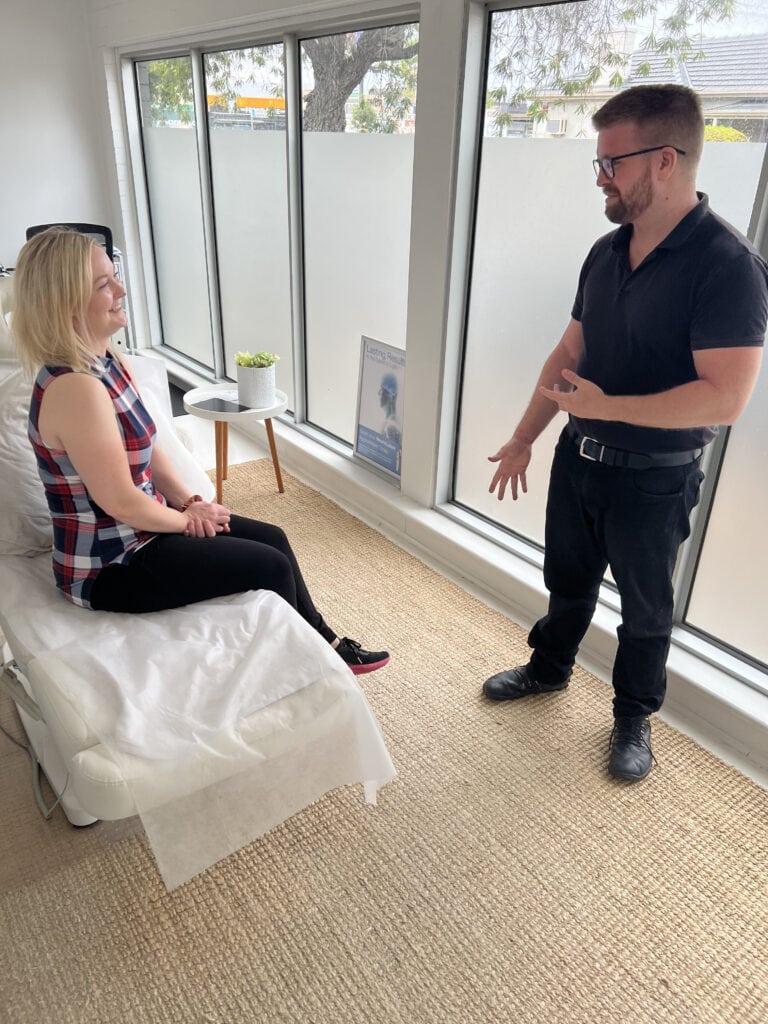
You Tell Us
We listen carefully, ask the right questions, and build a clear picture of what has been going on.
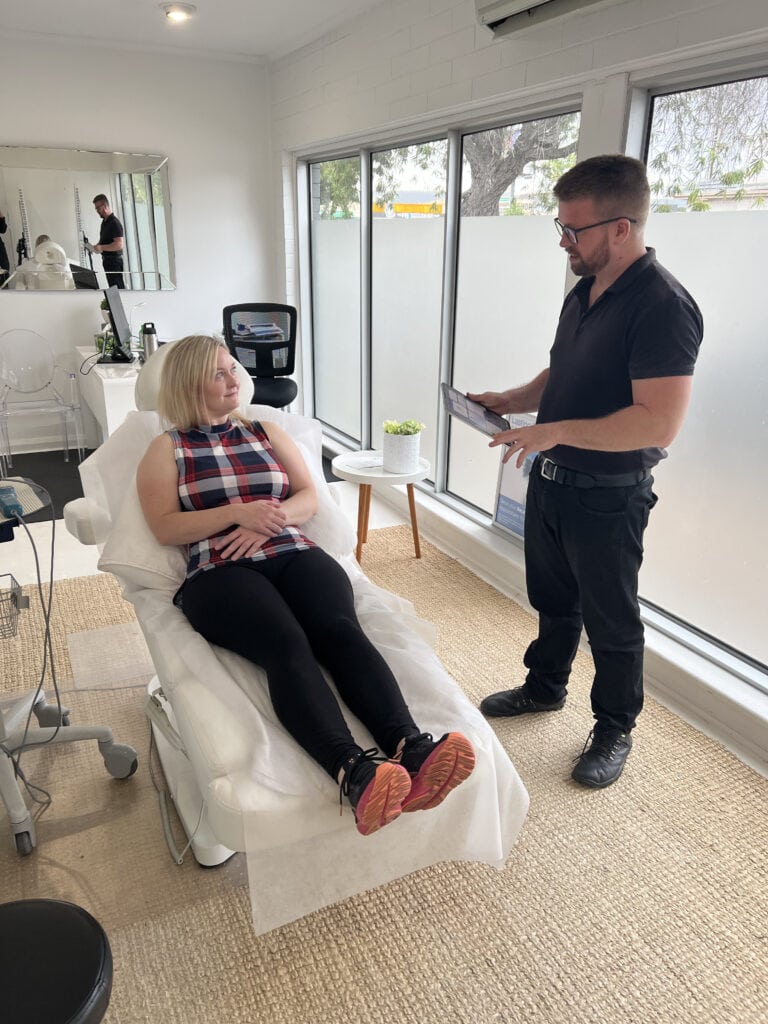
We Assess
Hands-on testing and biostructural analysis to identify what may be contributing to your concern.
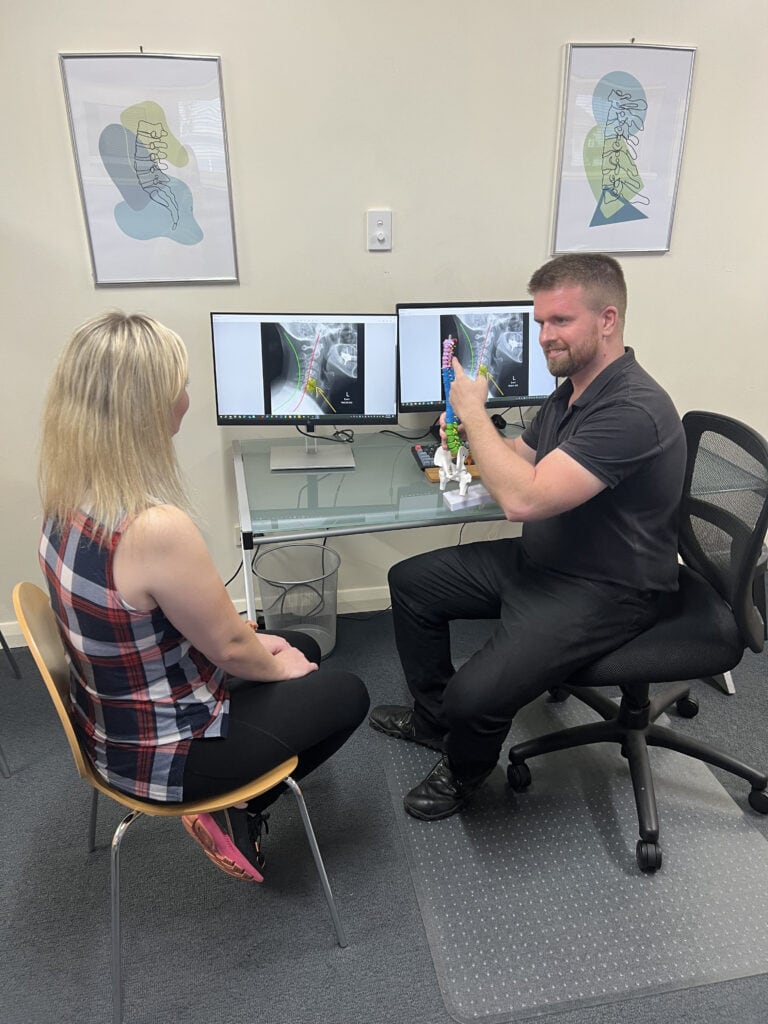
We Explain
We walk you through our findings and your options in plain language. If imaging is recommended, we will explain why and discuss your options.
X-rays are only referred for with your consent, and where eligible, may be bulk billed.*
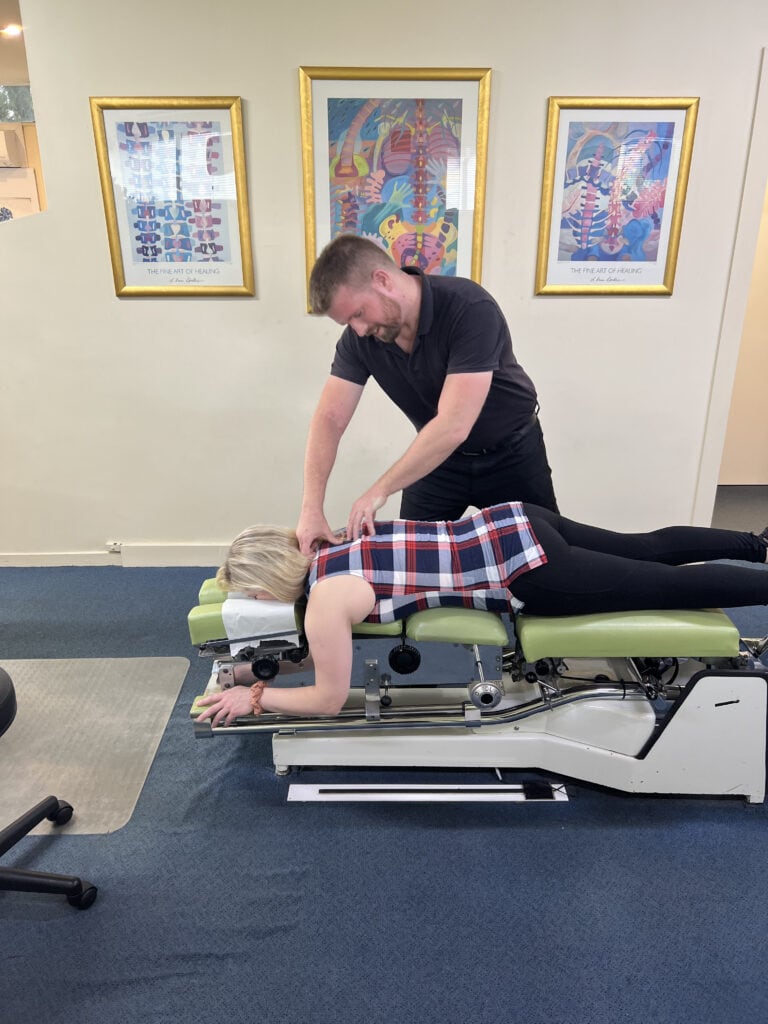
Care May Begin
Where clinically appropriate, care may begin on your first visit to help support relief.*
We offer both traditional hands-on chiropractic techniques and gentle, low-force approaches, tailored to your comfort. Care only proceeds with your consent.
Ready to Get Started?
Your first visit takes about 30 minutes. No referral needed, no lock-in plans. The decision is always yours.
Book Your First Visit*Subject to clinical assessment and suitability criteria. Bulk billing subject to eligibility criteria and clinical need.
Transparent Affordable Fees
Source: Australian Chiropractors Association Consultation Fee Survey 2025 (SA data). *Care provided where clinically appropriate, subject to assessment.
Care that fits your day
528 Marion Road, Plympton Park SA 5038
Ready to Get Started? We're Ready When You Are.
Choose a time that works for you. No referral needed.

Dr Sam Johnson (Chiropractor)
B.Sc.(Chiro), M.Chiro.(Macq)
$69
Initial Consultation
Up to 30 minutes, including full assessment
Book Your First VisitPrefer to call? (08) 8297 5277
Text: 0400 105 454 | Email: wecanhelp@stapletonchiropractic.com.au
You will receive a confirmation email with all details immediately after booking.
Quick answers before you book
How much does a first visit cost?
$69 for your initial consultation. Most health funds provide a rebate on the spot.
Do you accept private health insurance?
Yes, all major health funds accepted. Bring your card and we process your rebate at the time of your visit.
Do I need a GP referral?
No referral needed. You can book directly.
Will the treatment hurt?
Gentle techniques tailored to your comfort, which matters with a painful shoulder. Dr Sam Johnson (Chiropractor) explains everything before proceeding.
Can a chiropractor really help frozen shoulder?
A thorough assessment comes first. Research suggests manual therapy and exercise may help manage pain and movement, though the evidence is mixed and we will be honest about when your GP should be involved. Individual responses vary.
All care is provided subject to clinical assessment and individual suitability. Individual responses to treatment vary.
Book Your First Visit
$69 initial consultation. No referral needed. No lock-in plans. The decision is always yours.
Book a ConsultationPhone: (08) 8297 5277
All care is provided subject to clinical assessment and individual suitability. Individual responses to treatment vary.
What Is Frozen Shoulder and What Causes It?
Frozen shoulder, or adhesive capsulitis, is characterised by a spontaneous onset of pain, progressive restriction of shoulder movement, and disability that limits everyday activities (Page et al., 2014, Cochrane Database of Systematic Reviews). It affects roughly one per cent of the general population and most often appears between the ages of 40 and 60 (Kirker et al., 2023; Kingston et al., 2018).
The shoulder is wrapped in a capsule of connective tissue. In frozen shoulder, that capsule becomes inflamed, thickened, and tight, which is why both pain and a genuine loss of movement appear together. It is often described in overlapping phases: a painful, gradually stiffening stage, a stiff or frozen stage, then a slow thawing stage as movement returns. The whole process tends to be self-limiting but can persist for many months.
Frozen shoulder often starts for no obvious reason. Reported risk factors include diabetes, a higher body weight, being in the 40 to 60 age range, and a recent period of shoulder immobilisation such as after an injury or surgery. A 2018 study found that obesity and diabetes were significantly associated with adhesive capsulitis (Kingston et al., 2018, Journal of Shoulder and Elbow Surgery).
Who We Commonly Help With Frozen Shoulder
Frozen shoulder tends to appear in midlife and is more common in some groups than others. Below are presentations we commonly see. Evidence-informed chiropractic care may help manage pain and movement, the evidence is mixed, and individual responses vary.
The person living with diabetes
Frozen shoulder is more common in people with diabetes, with research reporting a significant association (Kingston et al., 2018). The shoulder stiffened over weeks for no clear reason, and night pain is wearing you down. Assessment helps confirm the picture and plan care around your general health. Research suggests manual therapy and exercise may help manage pain and movement, the evidence is mixed, and we will keep your GP in the loop. Individual responses vary.
The office worker in their fifties
You are in the 40 to 60 age range where frozen shoulder is most common (Kirker et al., 2023). Reaching for the back seat or the top shelf now sends a sharp, stopping pain. A thorough assessment helps separate frozen shoulder from other shoulder problems. Research suggests gentle manual therapy and exercise may help manage symptoms. Individual responses vary, and we will be honest about your options.
After a sling or shoulder injury
Frozen shoulder sometimes follows a period when the shoulder was kept still, such as after an injury or surgery. The shoulder that was protected is now stiff and painful to move. Assessment looks at range of movement and what may help restore it gradually. Research suggests manual therapy and exercise may help manage stiffness, and individual responses vary.
The midlife woman with night pain
Frozen shoulder is commonly seen in women in midlife. The ache that wakes you at night and the slow loss of reach have started affecting work and sleep. We assess the shoulder carefully and outline options together. Research suggests conservative care may help manage pain and movement, the evidence is mixed, and the decision is always yours.
The manual worker losing reach
Your work depends on reaching and lifting, and a stiffening, painful shoulder is making the job hard. A thorough assessment helps clarify what is going on and what may help. Research suggests manual therapy and exercise may help manage symptoms, individual responses vary, and we will refer on if that would serve you better.
All care is provided subject to clinical assessment and individual suitability. Individual responses to treatment vary.
When Shoulder Pain Needs Urgent or Medical Review
Most shoulder stiffness is musculoskeletal, but some features point to causes that need a doctor first. If any of the signs below apply, please see your GP or an emergency service rather than booking a routine chiropractic assessment. When in doubt, get it checked.
Seek prompt medical assessment if you have:
- Shoulder pain after a significant fall or injury, with an inability to move the arm (this may suggest a fracture or dislocation)
- Redness, heat, swelling, or fever around the shoulder (this may suggest infection and needs prompt care)
- A new lump or mass, or shoulder pain with a history of cancer (please see your GP)
- Numbness, pins and needles, or weakness spreading down the arm (this may suggest nerve involvement)
- Chest, jaw, or arm pain, or shortness of breath, especially with exertion (this may suggest a heart problem, call 000)
This list is general information, not a diagnosis. If you are unsure, see your GP or call (08) 8297 5277 and we will help you find the right pathway. All care at Stapleton Chiropractic is provided subject to clinical assessment and individual suitability.
How Chiropractic Care May Help With Frozen Shoulder
Chiropractic care for frozen shoulder centres on careful assessment, gentle manual therapy, and guided exercise, with honest collaboration with your GP. Research suggests manual therapy and exercise are commonly used options that may help manage pain and movement, although reviews note the overall quality of evidence is limited and benefits are not guaranteed (Page et al., 2014; Kirker et al., 2023). Individual responses vary.
Assessment first
A hands-on examination of how your shoulder moves, to help confirm frozen shoulder and identify other contributing factors, with discussion of GP review or imaging where clinically appropriate.
All care is provided subject to clinical assessment and individual suitability. Individual responses to treatment vary.
Gentle manual therapy
Hands-on mobilisation within your comfort, which research suggests may help manage shoulder pain and movement when combined with exercise (Nakandala et al., 2021). Generally well-tolerated and non-invasive.
All care is provided subject to clinical assessment and individual suitability. Individual responses to treatment vary.
Guided exercise
A tailored, gradual movement program, since manual therapy and exercise are usually studied and used together for frozen shoulder (Page et al., 2014).
All care is provided subject to clinical assessment and individual suitability. Individual responses to treatment vary.
GP collaboration
Some research suggests a corticosteroid injection may give faster short-term relief than manual therapy and exercise alone, so we will discuss when a GP review is worth considering (Page et al., 2014).
All care is provided subject to clinical assessment and individual suitability. Individual responses to treatment vary.
Frozen Shoulder: Comparing Common Care Options
| Approach | Typical focus | Hands-on | What to expect |
|---|---|---|---|
| Chiropractic (Stapleton) | Assessment, gentle manual therapy, guided exercise, GP collaboration | Yes | Unhurried assessment, gentle care within comfort, honest advice on when to involve your GP |
| Physiotherapy | Exercise prescription, manual therapy, movement rehabilitation | Often | Exercise-led rehabilitation over time |
| GP | Diagnosis, medication, corticosteroid injection, referral, imaging | No | Useful for red flags, injection discussion, or imaging |
If we feel you would benefit from a different approach, your GP, or another practitioner, we will always tell you. This table is general information to help you understand care options, not a recommendation that one approach is superior. All care is provided subject to clinical assessment and individual suitability. Individual responses to treatment vary.
Want a careful assessment of your stiff shoulder? Book a frozen shoulder assessment ($69). No referral needed.
Book a ConsultationAll care is provided subject to clinical assessment and individual suitability. Individual responses to treatment vary.
What the Research Really Says About Frozen Shoulder Care
We want to be straight with you. The research on conservative frozen shoulder care is mixed and of limited quality. Manual therapy and exercise are commonly used and may help manage pain and movement, but reviews have not shown them to clearly outperform other options, and some research favours corticosteroid injection for faster short-term relief (Page et al., 2014; Kirker et al., 2023). Individual responses vary.
Manual therapy and exercise for frozen shoulder
A Cochrane review of 32 trials reported that, following arthrographic joint distension, manual therapy and supervised exercise may provide greater patient-reported treatment success and active shoulder movement, while noting that a combination of manual therapy and exercise may not match glucocorticoid injection in the short term (Page et al., 2014, Cochrane Database of Systematic Reviews).
Individual responses to treatment vary. All care is provided subject to clinical assessment and individual suitability.
Where the evidence stands
A 2023 systematic review with meta-analysis found that the quality of evidence for manual therapy and exercise in adhesive capsulitis ranges from very low to low, which is why care should be individualised and expectations kept realistic (Kirker et al., 2023, Journal of Manual and Manipulative Therapy).
Individual responses to treatment vary. All care is provided subject to clinical assessment and individual suitability.
Physiotherapy techniques for adhesive capsulitis
A 2021 systematic review reported that certain physical therapy techniques are recommended for pain relief and improving range of motion and function in adhesive capsulitis, while the superiority of one approach over another remains uncertain (Nakandala et al., 2021, Journal of Back and Musculoskeletal Rehabilitation).
Individual responses to treatment vary. All care is provided subject to clinical assessment and individual suitability.
Low-level laser therapy as an adjunct
A Cochrane review of electrotherapy reported that, based on one trial, low-level laser therapy plus exercise may be more effective than exercise alone for pain in the short term and function for up to four months, with no adverse events reported (Page et al., 2014, Cochrane Database of Systematic Reviews, electrotherapy review).
Individual responses to treatment vary. All care is provided subject to clinical assessment and individual suitability.
Following arthrographic joint distension, a combination of manual therapy and supervised exercise may provide greater patient-reported treatment success and active shoulder abduction at six weeks (paraphrased from Page et al., 2014, Cochrane Database of Systematic Reviews).
Low-level laser therapy plus exercise for eight weeks may be more effective than exercise alone in terms of pain up to four weeks, and function up to four months, with no adverse events reported (paraphrased from Page et al., 2014, Cochrane Database of Systematic Reviews, electrotherapy review).
All care is provided subject to clinical assessment and individual suitability. Individual responses to treatment vary.
Last clinically reviewed: 22 June 2026 by Dr Sam Johnson (Chiropractor).
Frozen Shoulder and Cold Laser Therapy
Low-level laser therapy, often called cold laser, is one adjunct some people ask about for a painful, stiff shoulder. A Cochrane review reported that low-level laser therapy combined with exercise may help with pain in the short term and function for up to four months, based on limited evidence (Page et al., 2014).
Cold laser therapy is offered through Adelaide Cold Laser at the same Marion Road address. It is worth asking Dr Sam Johnson (Chiropractor) during your consultation whether cold laser therapy may be an appropriate adjunct for your situation. Cold laser initial consultation is $99. Please note cold laser therapy does not attract a private health insurance rebate.
Cold laser therapy is offered as one option that may be considered for some musculoskeletal presentations. Suitability is determined by individual clinical assessment. Individual responses to treatment vary.
Why People Choose Stapleton Chiropractic
- Est. 1972. A family practice on Marion Road for over 50 years.
- Evidence-informed and honest. Dr Sam Johnson (Chiropractor), BSc(Chiro), MChiro from Macquarie University, who will tell you when your GP should be involved.
- No lock-in plans. The decision is always yours.
- All major health funds accepted. Rebate processed at the time of your visit.
- Convenient. Free on-site parking, open Mon to Fri 7am to 7pm and Sat morning.
Book Your First Visit
$69 initial consultation. No referral needed. No lock-in plans. The decision is always yours.
Book a ConsultationPhone: (08) 8297 5277
All care is provided subject to clinical assessment and individual suitability. Individual responses to treatment vary.
Where Are You Right Now?
"Get me out of pain."
The night pain and stiffness are wearing you down and you want gentle, hands-on care plus a plan. Book an initial consultation and we will assess your shoulder and talk through options focused on managing your symptoms.
Book a Consultation"I want relief and answers."
You want a careful assessment to confirm what is going on, understand your options, and know when to involve your GP. Book an initial consultation for a thorough assessment with a plain-English explanation of what we find.
Book a ConsultationAll care is provided subject to clinical assessment and individual suitability. Individual responses to treatment vary.
Frequently Asked Questions About Frozen Shoulder
What is frozen shoulder?
Frozen shoulder, or adhesive capsulitis, is a condition where the shoulder capsule becomes painful and tight, gradually restricting movement (Page et al., 2014). It often comes on for no clear reason and tends to settle slowly over many months.
What are the stages of frozen shoulder?
It is commonly described in overlapping phases: a painful, stiffening stage, a frozen or stiff stage, then a slow thawing stage as movement returns. The pattern and timeframe differ from person to person.
Can a chiropractor help with frozen shoulder?
A thorough assessment comes first. Research suggests manual therapy and exercise may help manage pain and movement, although the evidence is mixed (Page et al., 2014). We will be honest about when your GP should be involved, and individual responses vary.
How much is a first appointment?
A first visit is $69 for an initial consultation, with a standard visit at $60. Most health funds provide a rebate on the spot.
Do I need a referral?
No referral is needed. You can book directly, and a first visit is $69.
Will treatment hurt?
Care uses gentle techniques within your comfort, which matters with a painful shoulder, and Dr Sam Johnson (Chiropractor) explains each step before proceeding. Individual responses vary.
How long does frozen shoulder last?
Frozen shoulder is usually self-limiting but often persists for many months, and the timeframe varies between people. We focus on your individual response rather than a fixed prediction.
Is frozen shoulder linked to diabetes?
Research reports a significant association between diabetes and adhesive capsulitis, and obesity is also linked (Kingston et al., 2018). If you live with diabetes, we plan care around your general health and keep your GP informed.
Should I consider a cortisone injection?
Some research suggests a corticosteroid injection may give faster short-term relief than manual therapy and exercise alone (Page et al., 2014). That is a conversation for your GP, and we are happy to collaborate on the right pathway.
What can I do at home?
A gentle, gradual movement program is usually part of frozen shoulder care, since exercise and manual therapy are typically used together (Page et al., 2014). Any home plan would be tailored to your shoulder and your comfort.
Should I get a scan?
Frozen shoulder is usually diagnosed from your history and examination rather than imaging. Your GP can advise if a scan is needed to rule out other causes, and we are happy to collaborate.
What if chiropractic is not the right fit for me?
Then we will say so. If we feel you would benefit from your GP, an injection discussion, or another practitioner, we will tell you. The decision is always yours.
Straightforward Fees
| Visit | Stapleton | SA average |
|---|---|---|
| Initial consultation | $69 | $122 |
| Standard visit | $60 | $71 |
Source: Australian Chiropractors Association Consultation Fee Survey 2025 (SA data). All major health funds accepted. No lock-in plans.
Book Your Frozen Shoulder Consultation
$69 initial consultation. No referral needed. All major health funds accepted. The decision is always yours.
What to Expect at Your First Visit
Stapleton Chiropractic is an evidence-based chiropractic practice at 528 Marion Road, Plympton Park, Adelaide (Est. 1972). An initial consultation costs $69 and includes a comprehensive 30-minute hands-on assessment. All major health funds accepted; no referral needed.
Allow up to 30 minutes for a comprehensive initial consultation. Here is how it works.
You Tell Us
We listen carefully, ask the right questions, and build a clear picture of what has been going on.
We Assess
Hands-on testing and biostructural analysis to identify what may be contributing to your concern.
We Explain
We walk you through our findings and your options in plain language. If imaging is recommended, we will explain why and discuss your options.
X-rays are only referred for with your consent, and where eligible, may be bulk billed.*
Care May Begin
Where clinically appropriate, care may begin on your first visit to help support relief.*
We offer both traditional hands-on chiropractic techniques and gentle, low-force approaches, tailored to your comfort. Care only proceeds with your consent.
Ready to Get Started?
Your first visit takes about 30 minutes. No referral needed, no lock-in plans. The decision is always yours.
Book Your First Visit*Subject to clinical assessment and suitability criteria. Bulk billing subject to eligibility criteria and clinical need.
Transparent Affordable Fees
Source: Australian Chiropractors Association Consultation Fee Survey 2025 (SA data). *Care provided where clinically appropriate, subject to assessment.
Care that fits your day
528 Marion Road, Plympton Park SA 5038
Ready to Get Started? We're Ready When You Are.
Choose a time that works for you. No referral needed.
Dr Sam Johnson (Chiropractor)
B.Sc.(Chiro), M.Chiro.(Macq)
$69
Initial Consultation
Up to 30 minutes, including full assessment
Book Your First VisitPrefer to call? (08) 8297 5277
Text: 0400 105 454 | Email: wecanhelp@stapletonchiropractic.com.au
You will receive a confirmation email with all details immediately after booking.
Phone: (08) 8297 5277
528 Marion Road, Plympton Park SA 5038
All care is provided subject to clinical assessment and individual suitability. Individual responses to treatment vary.
Dr Sam Johnson (Chiropractor) | BSc(Chiro), MChiro, Macquarie University. AHPRA registered, ACA member.
Stapleton Chiropractic | Est. 1972 | 528 Marion Road, Plympton Park SA 5038
(08) 8297 5277 | Mon to Fri 7am to 7pm, Sat 8am to 12pm | All major health funds accepted
Last clinically reviewed: 22 June 2026 by Dr Sam Johnson (Chiropractor)
References
- Kirker K, O'Connell M, Bradley L, Torres-Panchame RE, Masaracchio M. Manual therapy and exercise for adhesive capsulitis: a systematic review with meta-analysis. Journal of Manual and Manipulative Therapy. 2023;31(5):311-327. PMID 36861780. DOI 10.1080/10669817.2023.2180702.
- Page MJ, Green S, Kramer S, Johnston RV, McBain B, Chau M, Buchbinder R. Manual therapy and exercise for adhesive capsulitis (frozen shoulder). Cochrane Database of Systematic Reviews. 2014;(8):CD011275. PMID 25157702. DOI 10.1002/14651858.CD011275.
- Nakandala P, Nanayakkara I, Wadugodapitiya S, Gawarammana I. The efficacy of physiotherapy interventions in the treatment of adhesive capsulitis: a systematic review. Journal of Back and Musculoskeletal Rehabilitation. 2021;34(2):195-205. PMID 33185587. DOI 10.3233/BMR-200186.
- Kingston K, Curry EJ, Galvin JW, Li X. Shoulder adhesive capsulitis: epidemiology and predictors of surgery. Journal of Shoulder and Elbow Surgery. 2018;27(8):1437-1443. PMID 29807717. DOI 10.1016/j.jse.2018.04.004.
- Page MJ, Green S, Kramer S, Johnston RV, McBain B, Buchbinder R. Electrotherapy modalities for adhesive capsulitis (frozen shoulder). Cochrane Database of Systematic Reviews. 2014;(10):CD011324. PMID 25271097. DOI 10.1002/14651858.CD011324.
- Atan T, Bahar-Ozdemir Y. Efficacy of high-intensity laser therapy in patients with adhesive capsulitis: a sham-controlled randomized controlled trial. Lasers in Medical Science. 2020;36(1):207-217. PMID 32808147. DOI 10.1007/s10103-020-03121-z.

Last clinically reviewed: 22 April 2026 by Dr Sam Johnson (Chiropractor)