
Hip Pain Assessment in Adelaide
Hip pain is rarely just a hip problem. The lower back, the pelvis, and the gluteal tendons often share the load with the hip joint itself. Research suggests assessment should consider the full kinetic chain, not the hip in isolation.
At Stapleton Chiropractic, Dr Sam Johnson (Chiropractor) assesses the hip, lumbar spine, and sacroiliac region together to identify what may be driving your pain. Your first visit is $69 and includes assessment and, where clinically appropriate, care on the same day.

*All care is provided subject to clinical assessment and individual suitability. Individual responses to treatment vary.
Trusted by patients across Adelaide's southern suburbs since 1972. AHPRA registered. Evidence-informed kinetic-chain assessment. No lock-in plans.
Does This Sound Familiar?
Common hip pain patterns we hear. Tap a card if it resonates.
Groin stiffness worst in the morning that eases once you get moving, but stairs remind you it is there
Lateral hip pain at night: you cannot lie on that side without it waking you
Sharp groin pinch when you squat or get out of a low chair, especially after a long drive
Deep buttock ache that feels connected to your lower back and flares when you twist
Your First Hip Pain Assessment: $69
A structured assessment of the hip, lumbar spine, and sacroiliac region together. Where clinically appropriate, hands-on care is included on the same day.
Detailed History
Onset, pain pattern, aggravators, night pain, work and activity load, prior hip or back history, and red-flag screening.
Hip Range and Strength Testing
Flexion, extension, abduction, rotation. Gluteal strength and provocation tests for FAI and gluteal tendinopathy.
Lumbar and Sacroiliac Screen
Range, palpation, and movement patterns. The lumbar spine and SI joint are common sources of referred hip pain.
Gait and Functional Observation
Sit-to-stand, single-leg stance, and a short walk, looking for Trendelenburg pattern and compensatory movement.
Plain-English Explanation and Care
Findings explained clearly. If care is appropriate, gentle treatment begins the same visit. Activator, drop-piece, or soft tissue approaches available.
*All care is provided subject to clinical assessment and individual suitability. Individual responses to treatment vary.
Why Patients Choose Stapleton Chiropractic for Hip Pain
🏛️ Established 1972
Over 50 years of continuous practice from the same Marion Road location. A Plympton Park practice your family likely already knows.
🎓 Evidence-Informed
Dr Sam Johnson (Chiropractor) holds a BSc (Chiropractic) and MChiro from Macquarie University. Care is guided by clinical practice guidelines and musculoskeletal research. Outcomes discussed honestly.
📍 Convenient and Accessible
Open 7am to 7pm Monday to Friday and Saturday mornings. Free on-site parking. Marion Road commuter corridor. All major private health funds accepted. No referral required.
Who We See for Hip Pain
Hip pain covers a regional cluster of patterns. Below are common presentations we assess at Stapleton Chiropractic.
🌤️ Hip Osteoarthritis
What you might be experiencing:
- Groin and front-of-hip stiffness worst first thing in the morning, easing as you move
- Deep ache after sitting, catching feeling when you first stand up
- Putting on socks is awkward. Stairs remind you it is there
Research suggests conservative care (load guidance, gluteal work, and hip mobilisation) may help manage pain and function for hip osteoarthritis. Individual responses vary.
The Stapleton Chiropractic connection: We use gentle Activator and drop-piece techniques alongside loading work suited to the individual. If advanced OA warrants an orthopaedic opinion, we facilitate that referral.
🛏️ Lateral Hip Pain (Gluteal Tendinopathy)
What you might be experiencing:
- Deep tenderness over the bony point on the side of the hip
- Cannot lie on that side at night without pain waking you
- Aggravated by crossing legs, walking on a slope
Research suggests progressive gluteal loading is first-line care for greater trochanteric pain syndrome and may be more effective than cortisone injection over time. Individual responses vary.
The Stapleton Chiropractic connection: We focus on gluteal loading guidance, soft tissue work to the gluteal muscle bellies, and avoidance of direct pressure on the tendon during a flare.
🏋️ Femoroacetabular Impingement (FAI)
What you might be experiencing:
- Sharp groin pinch at end of a squat, deep hip flexion, or a long car trip
- Getting out of a low couch or chair is the worst
- Active adult in your 20s, 30s, or 40s
Research suggests a physiotherapy-style loading and movement retraining programme may help manage symptoms for many people. An orthopaedic opinion is warranted if conservative care plateaus.
The Stapleton Chiropractic connection: We assess movement patterns, provide manual therapy to restricted areas, and guide progressive loading. If mechanical locking develops, we discuss orthopaedic referral.
🦴 Referred Hip Pain from Lower Back
What you might be experiencing:
- Deep buttock or posterior hip ache that feels connected to your lower back
- Twisting or bending flares it. Sneezing tugs the wrong way
- Pain radiating into thigh, sometimes hard to pinpoint
Research suggests buttock pain may originate from the hip, lumbar spine, or sacroiliac joint. A structured assessment looks at all three together to identify the likely driver.
The Stapleton Chiropractic connection: We assess hip movement, lumbar movement, and sacroiliac function together as a kinetic chain. Care targets whichever structure may be driving the pattern.
*All care is provided subject to clinical assessment and individual suitability. Individual responses to treatment vary.
Sorting Out Which Pattern Fits
Hip pain is an umbrella. These patterns each behave differently and respond to different emphasis in care. Naming the pattern helps shape the plan.
🧑⚕️ Hip Osteoarthritis
Location: Groin, front of hip, sometimes thigh and knee
Aggravators: Stairs, prolonged sitting, twisting, morning stiffness
Research suggests: Manual therapy plus exercise may help manage pain and function
🔥 Greater Trochanteric Pain Syndrome
Location: Bony point on the side of the hip, radiating down outer thigh
Aggravators: Side-lying at night, crossing legs, walking on a slope
Research suggests: Progressive gluteal loading is first-line and may outperform cortisone injection
🛑 Femoroacetabular Impingement
Location: Groin, occasional C-sign grip around the hip
Aggravators: Deep squat, low chair, long car trips
Research suggests: Physiotherapy-style rehab may help many; orthopaedic opinion if plateau
🔄 Referred from Lumbar or Sacroiliac
Location: Buttock, posterior hip, sometimes into thigh
Aggravators: Bending, twisting, sustained positions, sneezing
Research suggests: Assessment looks at hip, lumbar, and SI together as a kinetic chain
*Assessment may find one pattern dominant, or a mix of contributors. Care is tailored to what the examination finds.
*All care is provided subject to clinical assessment and individual suitability. Individual responses to treatment vary.
⚠️ Warning Signs That Warrant Urgent Medical Review
Most hip pain is mechanical and not an emergency. Seek urgent medical review if your hip pain is accompanied by:
- Fever, night sweats, or malaise alongside a hot, swollen, very tender hip (may suggest septic arthritis, a medical emergency)
- Inability to bear weight after a fall or trauma (may suggest fracture)
- Severe night pain unrelieved by rest that wakes you regularly
- Unexplained weight loss, cancer history, or new bony hip pain that feels different
- Progressive weakness, numbness, or loss of bladder/bowel control (emergency department: call 000)
- Sudden groin pain with pale, cold, pulseless lower limb (vascular emergency)
- Children with hip pain, fever, and a limp: always warrants urgent review
If any of these apply, contact your GP, call healthdirect on 1800 022 222, or attend your nearest emergency department.
*All care is provided subject to clinical assessment and individual suitability. Individual responses to treatment vary.
How Hip Pain Connects to Other Conditions
Hip Pain and Lower Back Pain
The lumbar spine and sacroiliac region share nerve pathways with the hip and pelvis. Pain felt in the groin, buttock, or lateral hip may refer from the lower back. Assessment looks at both areas together.
Hip Pain and Knee Pain
Hip and knee pain often travel together through the kinetic chain. Gluteal weakness associated with hip pathology can alter knee mechanics, and knee problems can change gait in ways that load the hip differently.
What to Expect at Your First Visit
Stapleton Chiropractic is an evidence-based chiropractic practice at 528 Marion Road, Plympton Park, Adelaide (Est. 1972). An initial consultation costs $69 and includes a comprehensive 30-minute hands-on assessment. All major health funds accepted; no referral needed.
Allow up to 30 minutes for a comprehensive initial consultation. Here is how it works.
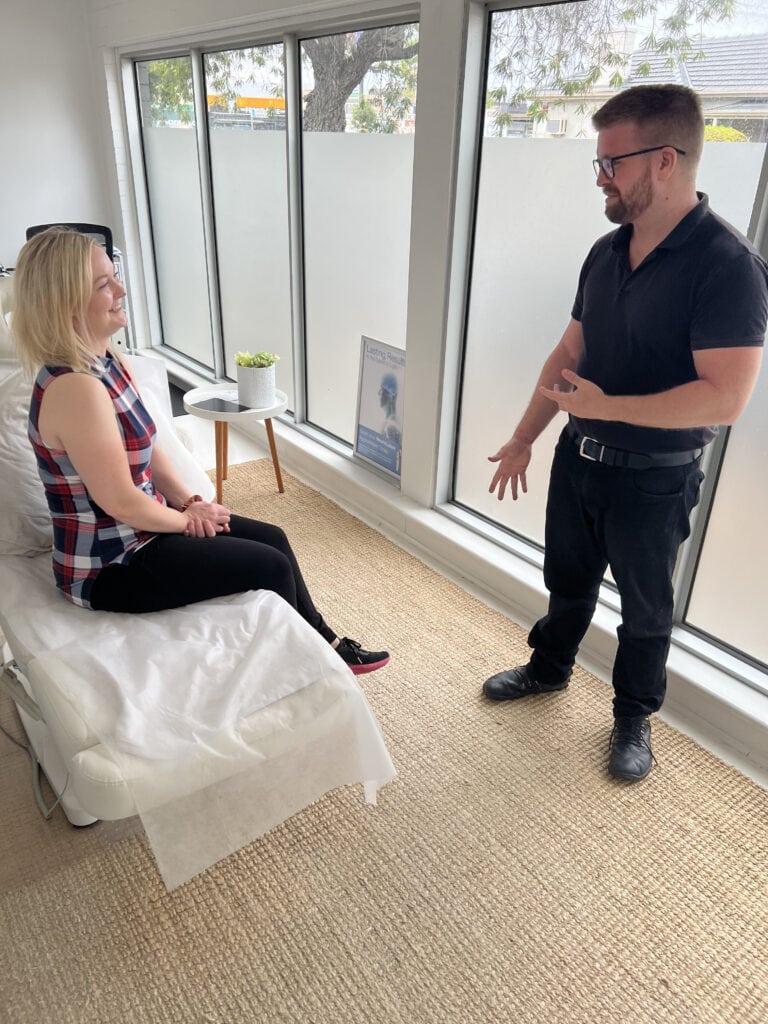
You Tell Us
We listen carefully, ask the right questions, and build a clear picture of what has been going on.
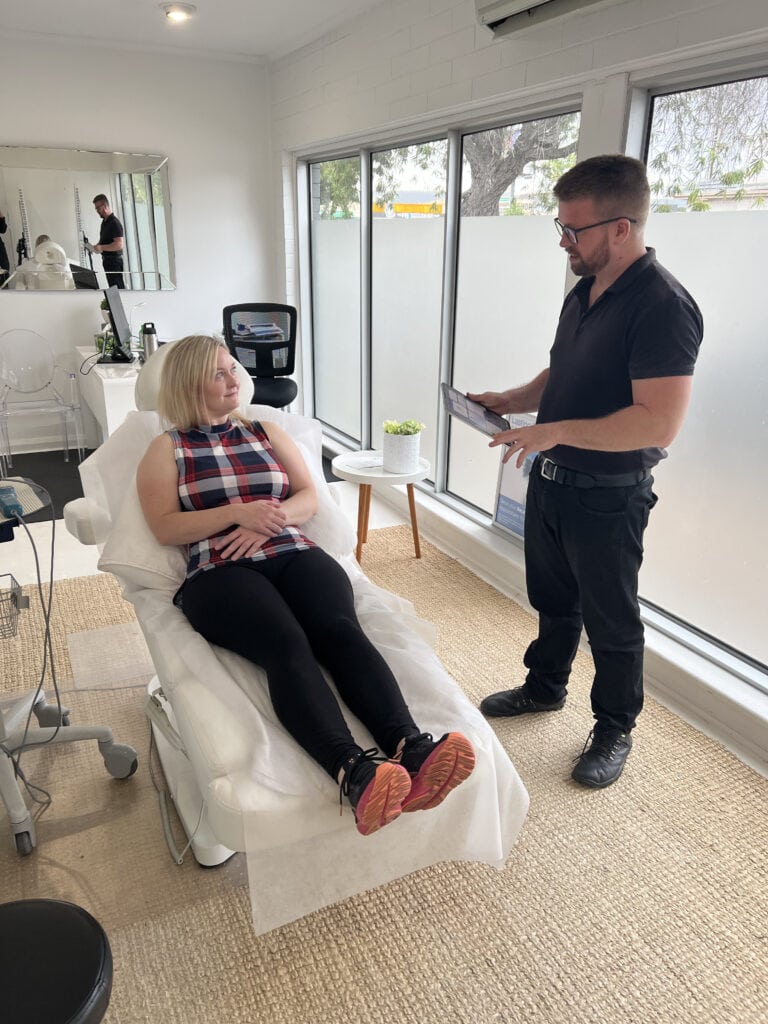
We Assess
Hands-on testing and biostructural analysis to identify what may be contributing to your concern.
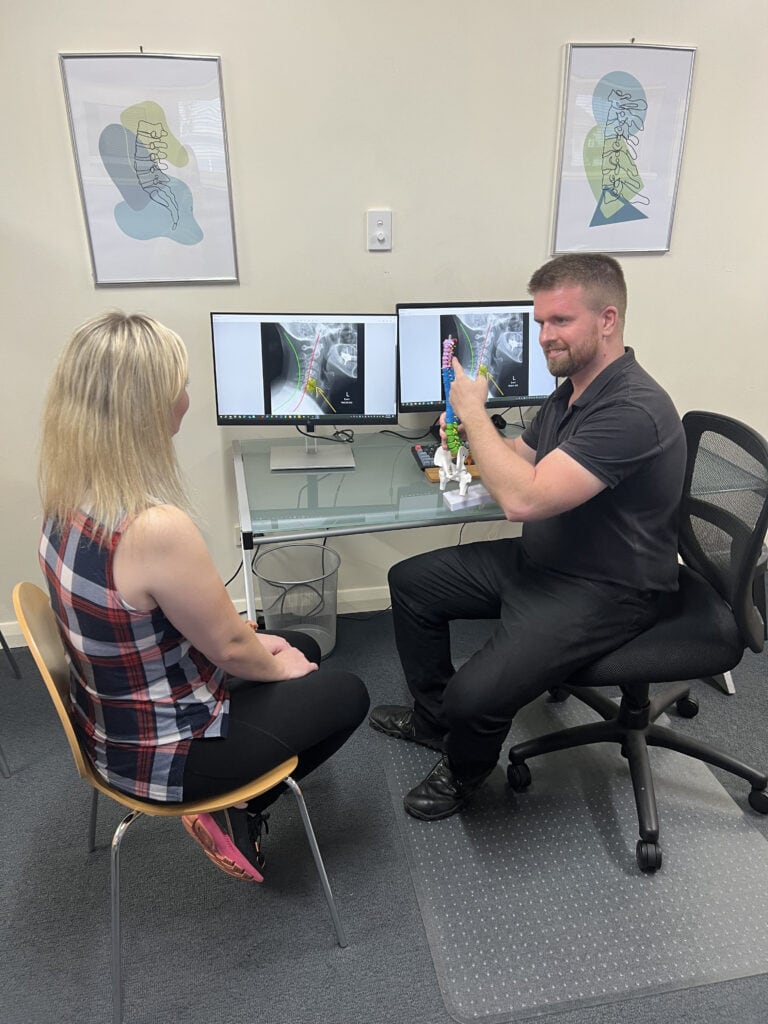
We Explain
We walk you through our findings and your options in plain language. If imaging is recommended, we will explain why and discuss your options.
X-rays are only referred for with your consent, and where eligible, may be bulk billed.*
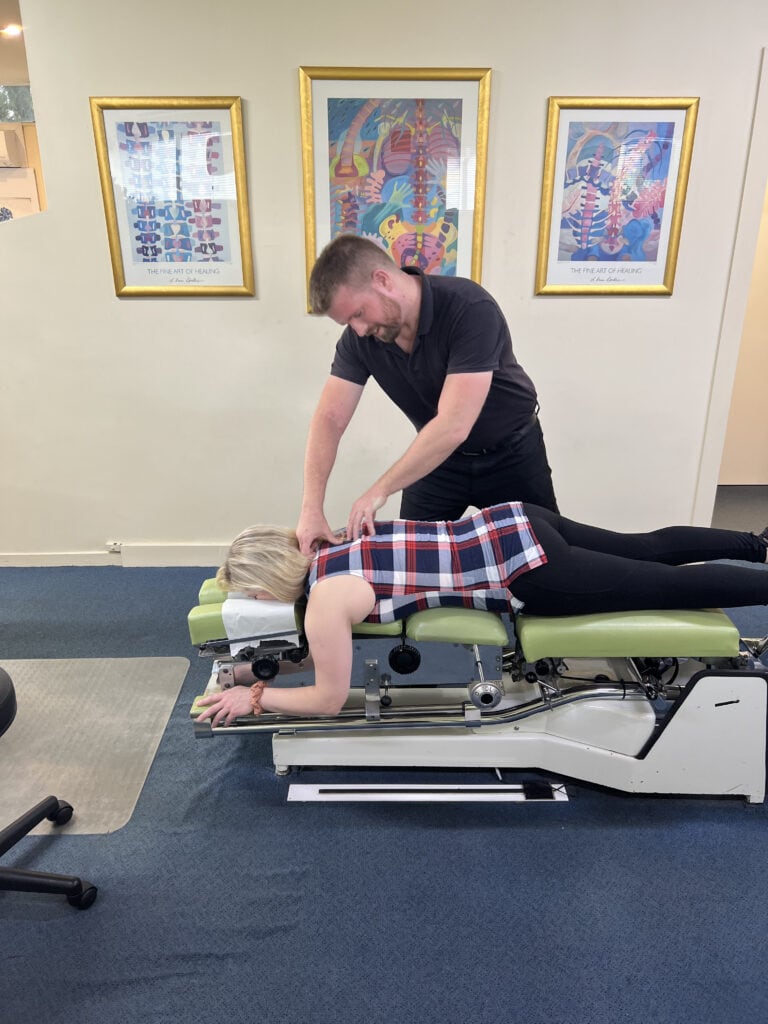
Care May Begin
Where clinically appropriate, care may begin on your first visit to help support relief.*
We offer both traditional hands-on chiropractic techniques and gentle, low-force approaches, tailored to your comfort. Care only proceeds with your consent.
Ready to Get Started?
Your first visit takes about 30 minutes. No referral needed, no lock-in plans. The decision is always yours.
Book Your First Visit*Subject to clinical assessment and suitability criteria. Bulk billing subject to eligibility criteria and clinical need.
Transparent Affordable Fees
Source: Australian Chiropractors Association Consultation Fee Survey 2025 (SA data). *Care provided where clinically appropriate, subject to assessment.
Care that fits your day
528 Marion Road, Plympton Park SA 5038
Ready to Get Started? We're Ready When You Are.
Choose a time that works for you. No referral needed.

Dr Sam Johnson (Chiropractor)
B.Sc.(Chiro), M.Chiro.(Macq)
$69
Initial Consultation
Up to 30 minutes, including full assessment
Book Your First VisitPrefer to call? (08) 8297 5277
Text: 0400 105 454 | Email: wecanhelp@stapletonchiropractic.com.au
You will receive a confirmation email with all details immediately after booking.
How Much Does a Chiropractor for Hip Pain Cost in Adelaide?
Based on the ACA Fee Survey 2025, Stapleton Chiropractic is well below the South Australian average.
$69
Stapleton Initial
$122
SA Average Initial
Standard visits: $60 (SA average: $71)
Source: Australian Chiropractors Association Fee Survey 2025. All major private health funds accepted.
What Does the Research Say?
Conservative manual therapy, graded exercise, and load guidance feature in mainstream guidelines for musculoskeletal hip pain. The studies below summarise research findings, not what any individual will experience.
Runge et al.: Adding Manual Therapy to Exercise for Hip or Knee OA
Systematic review with meta-analysis of 19 trials in people with hip or knee osteoarthritis. In the short term, adding manual therapy to exercise showed some added benefit for pain and for a combined pain, stiffness and function score (WOMAC), but not for function on its own. Confidence in that short-term finding was rated very low to moderate. In the long term, the review found with high confidence that there was no added benefit for pain or function. Individual responses vary.
JOSPT, 2022. PMID: 35881705Mellor et al.: Exercise vs Cortisone for Lateral Hip Pain
RCT of 204 adults with lateral hip pain from gluteal tendinopathy. A physiotherapy-led education and exercise program and a cortisone injection each led to higher rates of patient-reported overall improvement, and lower pain, than a wait-and-see approach. Education plus exercise had higher rates of overall improvement than the injection. At the trial's later review, pain levels did not differ between education plus exercise and the injection. Individual responses vary.
BMJ, 2018. PMID: 29720374Griffin et al.: Hip Arthroscopy vs Physio for FAI
Multicentre RCT of 348 people with femoroacetabular impingement (FAI) syndrome. Hip arthroscopy (keyhole surgery) and a personalised physiotherapist-led program both improved hip-related quality of life. Arthroscopy led to a greater improvement, a difference the authors judged clinically significant. Adverse events, most commonly muscle soreness, were reported in both groups, and by more people in the arthroscopy group. Individual responses vary.
Lancet, 2018. PMID: 29893223Bennell et al.: Physical Therapy Versus Sham for Hip OA
RCT of 102 adults with painful hip osteoarthritis. A physical therapy program of education, manual therapy and home exercise did not improve pain or function more than an inactive sham treatment. The active group also reported more mild side effects. Individual responses vary.
JAMA, 2014. PMID: 24846036Kjeldsen et al.: Exercise for GTPS
Systematic review with meta-analysis of six RCTs (733 participants) in greater trochanteric pain syndrome (GTPS), a cause of pain on the outer hip. Compared with sham exercise or wait-and-see, exercise slightly reduced hip pain and slightly improved physical function, and patients rated their overall improvement slightly higher. Compared with cortisone injection, patients rated their overall improvement higher with exercise. No serious adverse events were reported. The authors support exercise as first-line treatment, and note the findings rest on few trials and a moderate number of patients. Individual responses vary.
Physiotherapy, 2024. PMID: 38295551Abbott et al.: Manual Therapy and Exercise for Hip or Knee OA
RCT of 206 adults with hip or knee osteoarthritis. Manual physiotherapy added to usual care was associated with greater improvement on the trial's main osteoarthritis score (WOMAC) than usual care alone. Exercise physiotherapy added to usual care did better on physical performance tests, but not clearly on that main score. Combining the two did not show a clear benefit over usual care. Individual responses vary.
Osteoarthritis Cartilage, 2013. PMID: 23313532*All care is provided subject to clinical assessment and individual suitability. Individual responses to treatment vary.
Cold Laser Therapy for Hip Pain
For patients with tendon-related hip pain, photobiomodulation (cold laser) therapy may offer additional support. Our Multi-Radiance MR5 ACTIV PRO delivers therapeutic light, particularly relevant for gluteal tendinopathy and hip-related muscle tension.
💡 How It Works
Near-infrared light penetrates tissue to support cellular energy production and tissue recovery. For hip pain patients, this may help address tendon irritation and chronic muscle guarding around the hip and pelvis. Individual responses vary.
🧪 Research Context
Photobiomodulation has a growing evidence base for musculoskeletal tendinopathy. The proposed mechanism, supporting tissue recovery and reducing muscle fatigue, may be relevant to gluteal tendinopathy and hip-related muscle tension patterns.
💲 Pricing
Cold laser initial assessment: $99. Can be used alongside chiropractic care or as a standalone option. ACL11 Cold Laser operates from the same building.
*All care is provided subject to clinical assessment and individual suitability. Individual responses to treatment vary.
Frequently Asked Questions About Hip Pain
Answered by Dr Sam Johnson (Chiropractor).
It may be. The lumbar spine and sacroiliac region share nerve pathways with the hip and pelvis. A structured assessment looks at hip range, lumbar movement, and sacroiliac function together to identify the likely driver rather than the hip in isolation.
Not always. Whether imaging is useful depends on your history and examination findings. It may be recommended when warning signs are present, after significant trauma, or when care has not helped enough. We will explain if imaging would add useful information.
Research suggests conservative care including manual therapy combined with exercise and load guidance may help manage hip OA pain and function. A 2022 JOSPT meta-analysis found that adding manual therapy to exercise showed some short-term added benefit for pain, with very low to moderate certainty, but not for function, and no added benefit in the long term. Individual responses vary. Advanced OA may warrant orthopaedic review.
Also called gluteal tendinopathy, it is a common cause of lateral hip pain. Research suggests progressive gluteal loading is first-line care and may be more effective than cortisone injection over time. Soft tissue work may help while direct pressure on the tendon is avoided during a flare.
Gentle, graded activity usually helps more than rest for most mechanical hip pain. Walking, pool work, stationary cycling, and short glute-strengthening sets are typical starting points. During a flare, avoid the specific movements that aggravate your hip. A tailored plan after assessment is more useful than a generic one.
If you have fever with hip pain, inability to bear weight, severe pain after a fall, unexplained weight loss, night pain unrelieved by rest, or a history of cancer, see your GP or emergency department first. Chiropractic is well suited to mechanical hip pain after those possibilities have been considered.
Initial consultation is $69, standard follow-ups are $60. No lock-in plans. All major health funds accepted.
No. Chiropractic in Australia is a primary-contact profession. You can book directly. If you have red-flag features, please see your GP first. We coordinate with your GP where that makes sense.
Femoroacetabular impingement is a mechanical pattern where hip bones may contact abnormally during deep flexion. Research suggests many adults respond to progressive loading and movement retraining. If conservative care plateaus, an orthopaedic opinion is worth considering.
History-taking about your hip pattern and red-flag screening, physical examination including hip, lumbar, and sacroiliac screens, and a discussion of findings. If care is appropriate, options are explained including Activator, drop-piece, and soft tissue techniques. The decision is always yours.
*All care is provided subject to clinical assessment and individual suitability. Individual responses to treatment vary.
Common Concerns About Chiropractic for Hip Pain
🤔 "Is my hip too far gone for chiropractic?"
Even with advanced osteoarthritis, conservative care may help manage pain and maintain function while you consider options. If your hip warrants an orthopaedic opinion, we will always tell you.
🤔 "Should I just get a cortisone injection?"
For lateral hip pain, the LEAP trial found a physiotherapy-led education and exercise program and a cortisone injection both did better than a wait-and-see approach. Education plus exercise had higher rates of patient-reported overall improvement than the injection, though pain levels did not differ between the two at the trial's later review. An injection is a decision for you and your GP, and exercise-based care may be used alongside your medical care. Individual responses vary.
🤔 "Will I need to come forever?"
No lock-in plans. Progress is reviewed at each visit, and self-management advice is part of care. If care is not helping, we will say so. The decision to continue is always yours.
🤔 "Is chiropractic just cracking?"
We use gentle, low-force techniques (Activator, drop-piece) that do not involve cracking. These are generally well-tolerated and suited to an irritated or guarded hip. The approach is tailored to your comfort.
*All care is provided subject to clinical assessment and individual suitability. Individual responses to treatment vary.
Ready to Get Your Hip Assessed?
Two ways to move forward. No pressure, no lock-in plans.
Mon–Fri 7am–7pm | Sat 8am–12pm | Free Parking | 528 Marion Road, Plympton Park
*All care is provided subject to clinical assessment and individual suitability. Individual responses to treatment vary.
Take the First Step
A structured kinetic-chain assessment is the starting point. Your first visit ends with a plain-English explanation of what may be driving your hip pain and which options may help.
Book Your Hip Assessment: $69No referral required. Same-day care where appropriate. All major health funds accepted.
*All care is provided subject to clinical assessment and individual suitability. Individual responses to treatment vary.
Ready to Get Started? We're Ready When You Are.
Choose a time that works for you. No referral needed.
Dr Sam Johnson (Chiropractor)
B.Sc.(Chiro), M.Chiro.(Macq)
$69
Initial Consultation
Up to 30 minutes, including full assessment
Book Your First VisitPrefer to call? (08) 8297 5277
Text: 0400 105 454 | Email: wecanhelp@stapletonchiropractic.com.au
You will receive a confirmation email with all details immediately after booking.
*All care is provided subject to clinical assessment and individual suitability. Individual responses to treatment vary.
Last clinically reviewed: 17 May 2026 by Dr Sam Johnson (Chiropractor), B.Sc.(Chiro), M.Chiro.(Macq), AHPRA Registered.
Dr Sam Johnson (Chiropractor)
B.Sc.(Chiro), M.Chiro., Macquarie University. AHPRA registered. Member, Australian Chiropractors Association. In practice since 2014. Sam takes a kinetic-chain approach to hip pain, assessing the hip, lumbar spine, and sacroiliac region together.