
Arthritis & Joint Pain in AdelaideChiropractic support, alongside your GP
If stiffness, creaking, or ache in your knees, hips, hands, or back has been limiting your day, and you are not sure whether it is arthritis or something else, you are not alone. Mechanical joint pain often responds well to conservative care when assessed correctly and managed alongside your GP. Dr Sam Johnson (Chiropractor) helps you work out what type of joint pain you have, works within scope, and supports joint health through low-force manual therapy, movement advice, and evidence-informed care. Inflammatory arthritis sits outside chiropractic scope and is rheumatologist-led. $69 initial consultation. No referral needed.

Does this sound familiar?
Four common joint-pain patterns we hear. Tap a card for a plain-English explanation.
"Late-40s tradie, right knee has been stiff for years and mornings on site are brutal."
"55-plus office worker, left hip stiff and sharp getting up from the chair."
"60-plus walker, love it but left knee aches on descent and shortens my routes."
"Post-menopausal, thumbs and finger joints are knobby and typing hurts."
Is It Arthritis or Something Else?
Not all joint pain is arthritis, and not all arthritis causes pain in the way you might expect. The first job at Stapleton is to work out what pattern your joint pain fits, so the right path forward can be chosen.
Typical features that point towards mechanical osteoarthritis, which is in chiropractic scope as supportive care:
- Gradual onset over months to years, often in a weight-bearing joint such as a knee or hip.
- Morning stiffness under 30 minutes that eases with movement across the first part of the day.
- Asymmetric pattern, for example one knee, one hip, or one thumb affected more than the other.
- Normal inflammatory blood markers when your GP has run them.
- Ache with loading such as stairs, long walks, or standing up from low chairs.
Features that point towards inflammatory arthritis, which is rheumatologist-led and outside chiropractic scope:
- Morning stiffness over 60 minutes that is slow to ease through the day.
- Symmetric small-joint involvement in hands, wrists, and feet.
- Raised inflammatory markers such as CRP and ESR, or positive RF or anti-CCP on GP bloods.
- Systemic symptoms including fatigue, low-grade fever, or unintentional weight loss.
- Personal or family history of autoimmune disease, psoriasis, or ankylosing spondylitis.
If your pattern fits the inflammatory list, the priority is a prompt GP review and rheumatology referral, not chiropractic. If the pattern looks mechanical, a careful assessment may help confirm that and shape a sensible plan.
Differential Map: Joint Pain at a Glance
A simple map of the common categories. Each row signals whether the pattern is in scope at Stapleton, out of scope, or an emergency.
| Presentation | Morning stiffness | Pattern | Inflammatory markers | Chiro scope? | Next step |
|---|---|---|---|---|---|
| Mechanical OA (knee, hip, spine, hand) | Under 30 min; improves with movement | Asymmetric; weight-bearing joints | Normal | Yes, supportive | Co-management with GP; see also knee pain and hip pain pages |
| Rheumatoid arthritis | Over 60 min | Symmetric small joints (hands, wrists, feet) | Elevated (RF, anti-CCP, ESR, CRP) | No, refer rheumatologist | GP urgent; rheumatologist referral |
| Psoriatic arthritis | Variable | Asymmetric; DIP involvement; psoriasis history | Variable | No, refer rheumatologist | Rheumatology; dermatology where psoriasis is active |
| Ankylosing spondylitis | Severe, prolonged; improves with activity | Spine and sacroiliac; often younger adults | HLA-B27 positive; elevated ESR | No, refer rheumatologist | Rheumatology; MRI of SI joints often indicated |
| Gout | Acute onset over hours to days; atypical stiffness pattern | First MTP classic, then other joints | Uric acid elevated | No, refer GP or rheumatologist | GP for uric acid management |
| Septic arthritis | Acute; severe | Hot, swollen single joint plus fever | Elevated WBC, ESR, CRP | Emergency | Present to your nearest emergency department now |
| Spine-referred pain | Variable | Non-articular; follows dermatome pattern | Normal | Yes, assess spine | Chiropractic assessment; see lower back pain pillar |
What the Research Suggests
The studies below summarise what the research suggests about conservative care for mechanical osteoarthritis, not what any individual person will experience. Individual responses vary.
Ammendolia 2022 · Osteoarthritis and Cartilage
Manual therapy plus exercise may produce small-to-moderate benefits for knee OA
Systematic review and meta-analysis of manual therapy combined with exercise for knee osteoarthritis. Finding: combined mobilisation or manipulation plus exercise may produce small-to-moderate improvements in pain and function compared with exercise alone. Benefits decline without sustained activity.
Read the study →Delitto 2015 · JOSPT Clinical Practice Guidelines
Early mechanical musculoskeletal pain responds to conservative care first
Evidence-based clinical practice guideline. Supports a conservative-first pathway of exercise, manual therapy, weight management, and activity modification before escalating to imaging or injectables for early mechanical pain patterns. Adapted here to the mechanical OA context.
Read the guideline →Schneider 2019 · Arthritis Care & Research
Structured exercise may improve pain and function in hip OA
Systematic review of hip exercise programmes for hip osteoarthritis. Finding: structured exercise may produce small-to-moderate improvements in pain and function, with benefits sustained where adherence is maintained. Individual responses vary.
Read the study →Whitman 2006 · Am J Phys Med Rehabil
Combined manual and exercise therapy may outperform either alone for knee OA
Foundational meta-analysis. Finding: combined manual therapy plus exercise may produce superior short-term pain and function gains compared with either element alone or usual care, with most benefit in the first six to twelve weeks and maintenance dependent on continued activity.
Read the study →Mainstream guidelines from NICE and the Royal Australian College of General Practitioners consistently place exercise, weight management where relevant, patient education, and manual therapy as first-line supportive care for mechanical osteoarthritis, with imaging and medication decisions led by your GP. Care is coordinated, not competitive.
Chiropractic vs Physiotherapy vs GP plus Rheumatologist
Joint-pain care is almost always a team sport. Here is where each role typically sits.
| What you get | Chiropractic (Stapleton) | Physiotherapy | GP plus Rheumatologist |
|---|---|---|---|
| Primary focus | Mechanical joint pain, movement restoration, low-force manual therapy plus exercise | Exercise-first rehab, function, progressive loading | Diagnosis, medical management, inflammatory arthritis pathway |
| Manual therapy | Low-force options (Activator, drop-piece), gentle mobilisation, soft tissue work | Soft tissue work, gentle mobilisation | Minimal; focus is on medical care |
| Exercise prescription | Yes, short home-based routines tailored to the joint and your lifestyle | Yes, often higher volume and progressive | Typically referred out |
| Lock-in plans | No. Visit by visit; the decision is always yours | Varies by clinic | Not applicable |
| Imaging and medication | We coordinate; we do not prescribe or order | Usually coordinate; do not prescribe | Full scope, including disease-modifying medication |
| Referral pathway | No referral needed; we happily coordinate with your GP | No referral needed | GP is your referral hub for rheumatology |
If we feel you would benefit more from a physiotherapist, your GP, or a rheumatologist, we will tell you.
How Chiropractic Care May Help Mechanical Joint Pain
Research suggests conservative care, combining low-force manual therapy with graded exercise, may help manage mechanical joint pain in knees, hips, hands, and spinal joints. Care is tailored to the joint, your history, and your goals. Individual responses vary.
At Stapleton Chiropractic, a typical approach for mechanical joint pain includes:
- Detailed history and red-flag screen to confirm the presentation is mechanical and to rule out anything that warrants urgent medical review or rheumatology referral.
- Physical examination covering range of motion and end-feel, joint stability, movement patterns, and pain with loading versus passive stretch.
- Low-force adjustment using an Activator instrument or drop-piece table, which are well tolerated and better suited to arthritic joints than high-velocity manipulation.
- Diversified manual adjustment where clinically appropriate and with your informed consent, applied to segments adjacent to the painful joint.
- Soft tissue work to peri-articular muscles that often guard around a painful joint.
- Graded movement and load-management guidance for the positions that aggravate your pain, with short home exercises you can fit into a working week.
High-velocity manipulation on arthritic joints carries theoretical risk and is generally avoided. Progress is reviewed at each visit and the decision to continue is always yours. If the response is not what we would expect, we will reassess and, where appropriate, discuss referral back to your GP, to a physiotherapist, or to a rheumatologist for inflammatory pathways.
Why Stapleton Chiropractic
Adult-first, evidence-informed, and family-run since 1972. No lock-in plans, clear pricing, and the decision is always yours.
Est. 1972
More than five decades of conservative-first musculoskeletal care on Marion Road.
Evidence-informed
Care follows current systematic reviews and clinical guidelines. We say "may help", not "treats".
Conservative-first referral-ready
If your GP, a rheumatologist, or a physiotherapist would serve you better, we will say so clearly.
Transparent pricing
$69 initial consultation, $60 standard. All Major Health Funds Accepted. No lock-in plans.
What Your First Visit Looks Like
Four straightforward steps. Step 3 is the critical decision point for arthritis presentations.
Listen & intake
Joint history, onset pattern, morning-stiffness duration, systemic symptoms, prior imaging, current medications, and a red-flag screen.
Physical examination
Range of motion and end-feel, stability, movement patterns, loading versus passive-stretch pain, and palpation for warmth, swelling, or structural change.
Mechanical-vs-inflammatory decision
Morning stiffness over 60 minutes plus polyarticular symmetric pattern plus raised markers points to rheumatology referral before manual therapy. A mechanical pattern supports chiropractic co-management.
Plan & expectations
If mechanical is confirmed, we discuss low-force approach, a short home exercise, realistic outcomes, and upfront cost. No lock-in plans. The decision is always yours.
Unsure whether your joint pain is in our scope?
A first consultation is the most efficient way to find out. If your pattern looks inflammatory, we will say so and help you route into rheumatology promptly.
Book a ConsultationTransparent Affordable Fees
No lock-in plans, no pressure. Fees sit well below the South Australian average.
Source: Australian Chiropractors Association Consultation Fee Survey 2025 (SA data). All Major Health Funds Accepted.
Warning Signs That Warrant Urgent Medical Review
Most mechanical joint pain is not an emergency. A small number of presentations do need immediate medical review.
Stop and seek medical review if any one of these applies:
- Septic arthritis signs: a hot, swollen single joint with fever and rapid onset. Present to your nearest emergency department now.
- Suspected fracture or stress fracture: recent trauma, deformity, or inability to weight-bear. See your GP and request imaging; attend the emergency department if severe.
- Progressive neurological deficit: numbness spreading, weakness, or bowel or bladder changes. Contact your GP urgently or attend the emergency department.
- Unexplained systemic symptoms: fever, unintentional weight loss, night sweats, or significant fatigue alongside your joint pain. See your GP for blood work and appropriate referral.
- First-ever large-joint swelling with morning stiffness over 60 minutes: possible inflammatory arthritis. See your GP, who may refer to a rheumatologist.
- Signs of rheumatoid, psoriatic, or ankylosing spondylitis: symmetric small-joint pain, polyarticular swelling, or persistently raised inflammatory markers. Rheumatologist-led.
- Rapidly progressive joint deformity over weeks. See your GP or a rheumatologist.
- Contraindications to manual therapy: anticoagulant therapy with bruising, severe osteoporosis with a trauma history, or joint instability. GP clearance is sensible first.
If any of these apply, please contact your GP, call healthdirect on 1800 022 222, or attend your nearest emergency department. Features of this kind may indicate a condition that warrants urgent medical review rather than a mechanical joint issue. When in doubt, please speak to your GP first.
Ready to Get Started? We're Ready When You Are.
Choose a time that works for you. No referral needed.
Dr Sam Johnson (Chiropractor)
B.Sc.(Chiro), M.Chiro.(Macq)
$69
Initial Consultation
Up to 30 minutes, including full assessment
Book Your First VisitPrefer to call? (08) 8297 5277
Text: 0400 105 454 | Email: wecanhelp@stapletonchiropractic.com.au
You will receive a confirmation email with all details immediately after booking.
Frequently Asked Questions
What is the difference between arthritis and joint pain?
Can a chiropractor help with arthritis?
Do I need an X-ray or MRI first?
Is manipulation safe if I have arthritis?
Will chiropractic care make my arthritis worse?
Do I need to see a rheumatologist before a chiropractor?
Do you accept my health fund?
What does the first visit cost?
Ready to Take the First Step?
Book your initial consultation with Dr Sam Johnson (Chiropractor). No referral needed. $69 initial consultation.
Stapleton Chiropractic. Est. 1972. Clinically led by Dr Sam Johnson (Chiropractor), BSc (Chiropractic) and MChiro, Macquarie University. AHPRA-registered.
Address: 528 Marion Road, Plympton Park SA 5038 Phone: (08) 8297 5277 Hours: Mon to Fri 7am to 7pm, Sat 8am to 12pm Email: wecanhelp@stapletonchiropractic.com.au
Scope note: We focus on the assessment and conservative management of musculoskeletal conditions, including mechanical osteoarthritis. We do not make claims about inflammatory arthritis or non-musculoskeletal conditions, and we coordinate with GPs and rheumatologists where those pathways are indicated.
What to Expect at Your First Visit
Stapleton Chiropractic is an evidence-based chiropractic practice at 528 Marion Road, Plympton Park, Adelaide (Est. 1972). An initial consultation costs $69 and includes a comprehensive 30-minute hands-on assessment. All major health funds accepted; no referral needed.
Allow up to 30 minutes for a comprehensive initial consultation. Here is how it works.
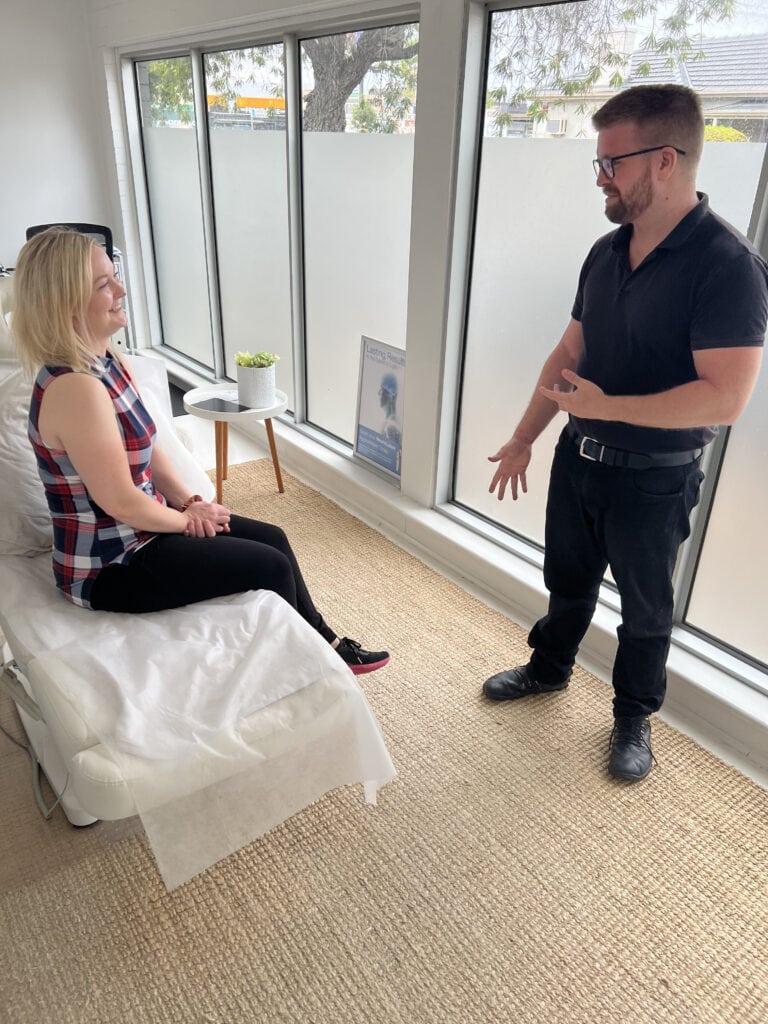
You Tell Us
We listen carefully, ask the right questions, and build a clear picture of what has been going on.
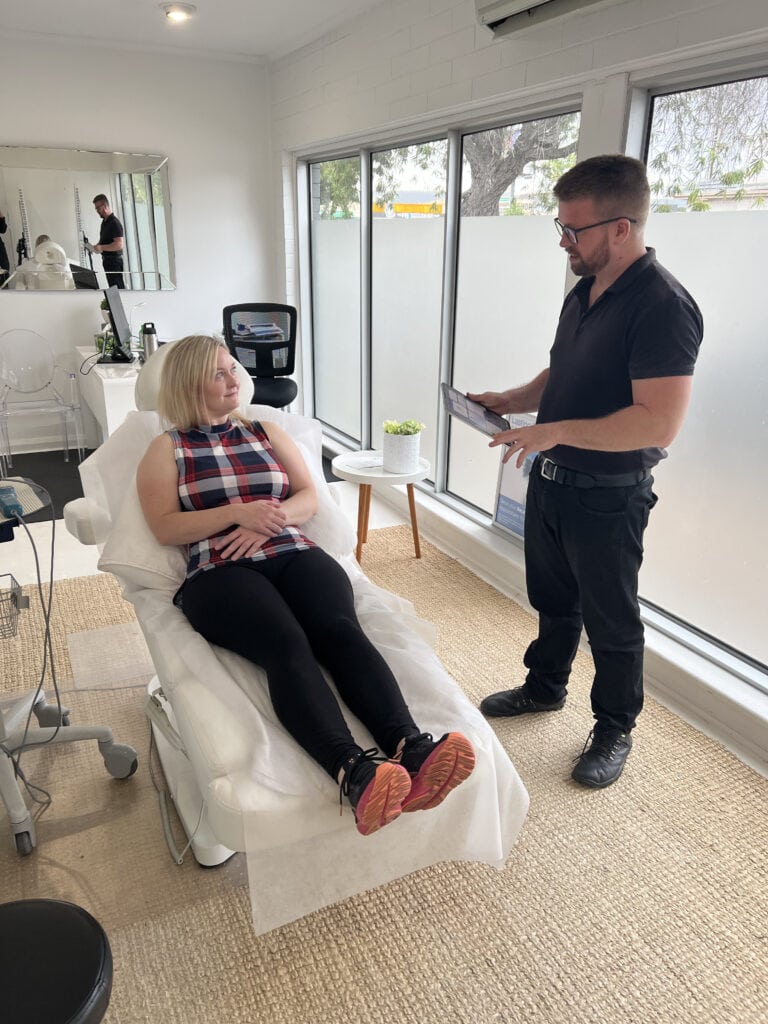
We Assess
Hands-on testing and biostructural analysis to identify what may be contributing to your concern.
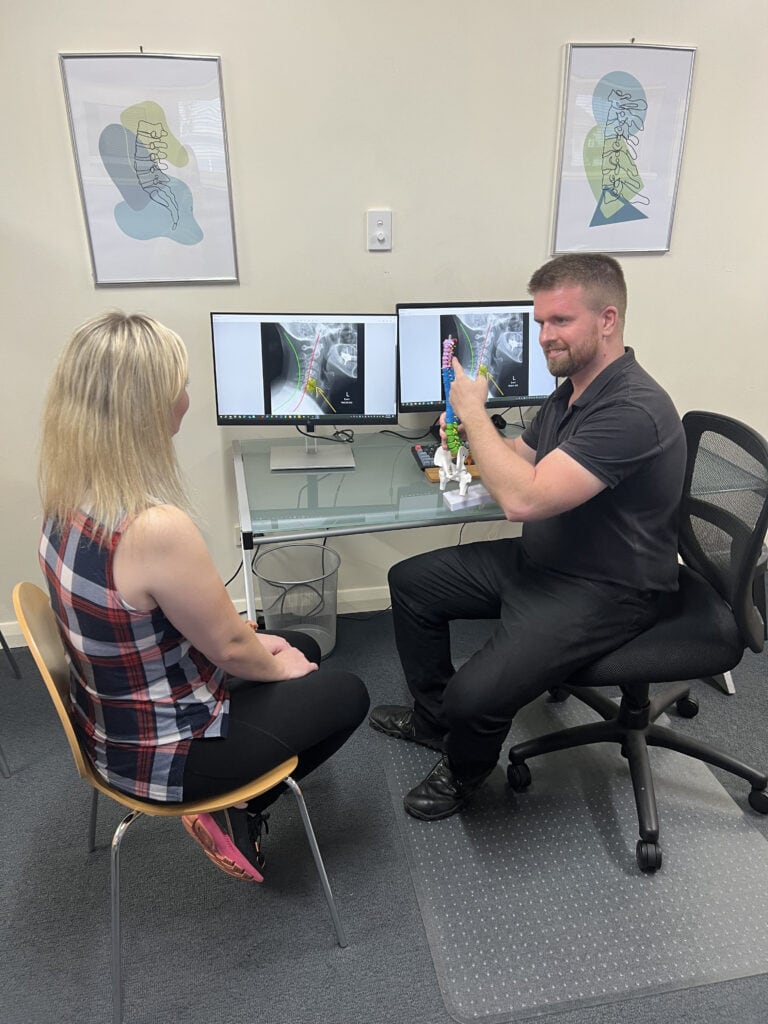
We Explain
We walk you through our findings and your options in plain language. If imaging is recommended, we will explain why and discuss your options.
X-rays are only referred for with your consent, and where eligible, may be bulk billed.*
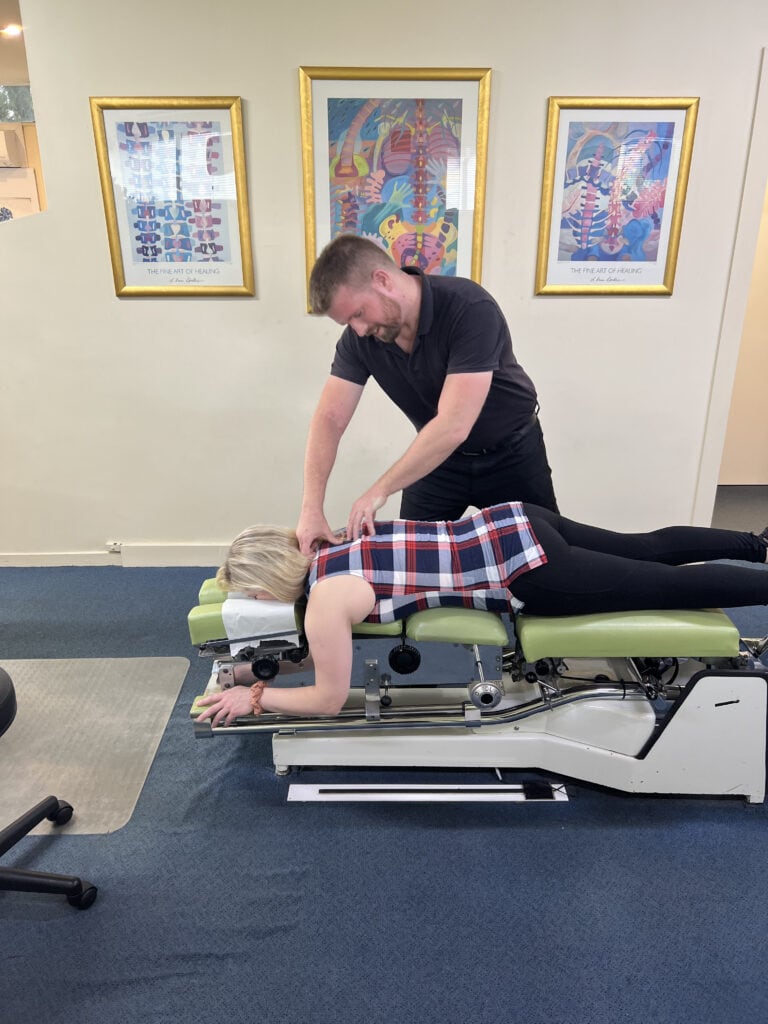
Care May Begin
Where clinically appropriate, care may begin on your first visit to help support relief.*
We offer both traditional hands-on chiropractic techniques and gentle, low-force approaches, tailored to your comfort. Care only proceeds with your consent.
Ready to Get Started?
Your first visit takes about 30 minutes. No referral needed, no lock-in plans. The decision is always yours.
Book Your First Visit*Subject to clinical assessment and suitability criteria. Bulk billing subject to eligibility criteria and clinical need.
Transparent Affordable Fees
Source: Australian Chiropractors Association Consultation Fee Survey 2025 (SA data). *Care provided where clinically appropriate, subject to assessment.
Care that fits your day
528 Marion Road, Plympton Park SA 5038
Ready to Get Started? We're Ready When You Are.
Choose a time that works for you. No referral needed.

Dr Sam Johnson (Chiropractor)
B.Sc.(Chiro), M.Chiro.(Macq)
$69
Initial Consultation
Up to 30 minutes, including full assessment
Book Your First VisitPrefer to call? (08) 8297 5277
Text: 0400 105 454 | Email: wecanhelp@stapletonchiropractic.com.au
You will receive a confirmation email with all details immediately after booking.