
Lumbar Facet Joint Pain ChiropractorAdelaide
If your lower back flares when you lean back, stand for too long, or twist, and eases when you sit forward or bend, you may be dealing with a facet-pattern pain presentation. Research suggests the lumbar facet joints may contribute to 5 to 15 per cent of chronic lower back pain. $69 initial consultation. No referral needed.

Does this sound familiar?
Common lumbar facet joint pain patterns we hear. Tap a card for a plain-English explanation.
"Hurts to lean back or stand for ages, eases when I sit forward."
"One-sided lower back pain that stays in my back and does not shoot down my leg."
"Lower back stiffness after long drives or loaded lifting, worst when I straighten up."
What Lumbar Facet Joint Pain Looks Like
Facet-pattern lower back pain is typically axial, often one-sided, aggravated by extension and rotation, and eased by flexion. Pain usually stays local to the lower back and upper buttock and rarely travels below the knee.
Typical features include:
- Location across the lower lumbar spine, often unilateral, sometimes spreading into the upper buttock.
- Aggravators including leaning back, prolonged standing, twisting or rotating, and reaching overhead.
- Easing often with sitting forward, flexing the spine, and avoiding sustained extension.
- Morning stiffness that tends to ease with the first few minutes of movement.
- Differentiation point: pain that travels below the knee with numbness or pins and needles is more typical of disc-referred radicular pain than facet-pattern pain.
Facet, Disc, SI Joint, or Muscle Strain?
Most mechanical lower back pain falls into one of four patterns. The differences matter because the assessment, the movement guidance, and the likely response to care can differ across them.
A simple differentiation guide:
- Lumbar facet: axial, often one-sided, aggravated by extension and rotation, eased by flexion, rarely radiates below the knee.
- Discogenic (disc-referred): central or paracentral, aggravated by flexion and sitting, may radiate below the knee along a clear leg-line if a nerve root is involved.
- Sacroiliac joint: below the belt line on one side, aggravated by single-leg loading such as stairs and rolling in bed.
- Muscle strain: localised to the involved muscle, reproduced by contraction against resistance, usually settles with rest and gentle movement.
What the evidence base tells us:
- Cohen and Raja 2007 estimated the lumbar facet joints contribute to 5 to 15 per cent of chronic lower back pain, rising in older cohorts, based on controlled medial branch block studies.
- Manchikanti et al. established dual or comparative medial branch blocks as the reference standard for confirming facet-mediated pain, as single uncontrolled blocks carry a false-positive rate of 25 to 40 per cent.
- NICE NG59 recommends a combined package of manual therapy, exercise, and psychological support for persistent non-specific lower back pain, delivered as a treatment programme rather than as a standalone intervention.
Sources: Cohen SP, Raja SN. Anesthesiology 2007;106:591. Manchikanti L et al. Pain Physician 2001;4:308. NICE Guideline NG59 (2016, updated 2020).
What the Research Suggests
Manual therapy, combined with graded movement and load-management guidance, is recommended in mainstream lower-back-pain guidelines as part of a broader package of care. The studies below summarise what the research suggests, not what any individual person will experience.
Cohen & Raja 2007 · Anesthesiology
Lumbar facet joints contribute to 5 to 15 per cent of chronic lower back pain
Narrative review of controlled medial branch block studies across chronic lower back pain populations. Prevalence rises in older cohorts. Extension and rotation are the typical aggravators.
Read the study →Manchikanti 2001 · Pain Physician
Dual diagnostic blocks reduce the false-positive rate in facet pain diagnosis
Controlled medial branch block research suggests single uncontrolled blocks carry a false-positive rate of 25 to 40 per cent. Dual or comparative blocks are considered the reference standard for confirming facet-mediated pain.
Read the study →NICE NG59 · 2016 / 2020 update
Manual therapy + exercise + psychological support for persistent low back pain
UK National Institute for Health and Care Excellence recommends a layered package for persistent non-specific lower back pain, including manual therapy, graded exercise, and psychological support delivered as a treatment programme.
Read the guideline →Falco 2012 · Pain Physician
Systematic review of therapeutic approaches for lumbar facet-mediated pain
Evidence-based review of diagnostic and therapeutic strategies in lumbar facet joint pain. Reinforces the role of careful clinical assessment alongside guideline-concordant conservative care. Individual responses vary.
Read the study →How Chiropractic Care May Help
Research suggests manual therapy, combined with graded movement and load-management guidance, may help as part of a broader treatment package for non-specific lower back pain. Care is tailored to how your lumbar spine responds to assessment. Individual responses vary.
At Stapleton Chiropractic, care for suspected lumbar facet joint pain typically includes:
- Movement and provocation testing by Dr Sam Johnson (Chiropractor) to check which directions, such as extension, rotation, or combined movements, reproduce or ease your symptoms and to rule out red-flag features.
- Soft tissue techniques for the lumbar paraspinals and quadratus lumborum, which often guard around a sore facet joint. This may help reduce protective tension and restore comfortable movement.
- Low-force adjustment using an Activator instrument or drop-piece table where appropriate. Both are well-tolerated and suited to a guarded or irritated lumbar spine.
- Diversified manual adjustment for patients comfortable with hands-on adjusting, applied to the lumbar spine as clinically indicated.
- Movement-pattern guidance you can take home, covering positions and loading strategies that may ease things at the desk, on Marion Road, or on site while the tissues settle.
Progress is reviewed at each visit. There are no lock-in plans, and the decision to continue is always yours. If your response to care is not what we would expect, we will reassess and, where appropriate, discuss referral pathways back to your GP, to imaging, to a pain clinic, or to a colleague in another discipline.
Chiropractic vs other common approaches
| Approach | Chiropractic (here) | Physiotherapy | Remedial massage |
|---|---|---|---|
| Primary focus | Joint and soft tissue, movement, and load | Movement, exercise rehab, education | Muscle tension and soft tissue |
| Manual adjustment | Yes. Activator, drop-piece, or diversified manual | Sometimes, depending on the practitioner | No |
| Soft tissue work | Yes, alongside adjustment | Yes, alongside exercise | Yes, primary focus |
| Exercise prescription | Yes, graded to the lumbar spine | Yes, typically the primary tool | Occasionally |
| Lock-in plans | No | Varies by clinic | Varies by clinic |
| Referral needed | No | No | No |
If we feel you would benefit from a different approach, we will always let you know.
Why Stapleton Chiropractic
Adult-first, evidence-informed, and family-run since 1972. No lock-in plans, clear pricing, and the decision is always yours.
Est. 1972
Over five decades on Marion Road. A Plympton Park practice your family likely already knows.
Evidence-informed
Care is guided by Cochrane reviews, NICE guidelines, and current clinical research. Outcomes are discussed honestly.
No lock-in plans
Pay per visit. The decision to continue is always yours, reviewed at each appointment.
Transparent pricing
$69 initial consultation, $60 standard. All major health funds accepted with on-the-spot claiming where supported.
What Your First Visit Looks Like
Four straightforward steps. No paperwork marathons, no surprises.
Book online or call
Pick a time that suits. No referral needed. $69 initial consultation.
Brief intake
Short history form at reception, covering the pain story and any red flags.
Assessment
Examination including Kemp test plus local paraspinal palpation. We explain what we find.
Discussion & next steps
Plain-English findings and options. If care is appropriate, we discuss it. The decision is always yours.
Ready to speak to Dr Sam?
$69 initial consultation. No lock-in plans. All major health funds accepted.
Book a ConsultationTransparent, Affordable Fees
No lock-in plans, no pressure. Fees sit well below the South Australian average.
Source: Australian Chiropractors Association Consultation Fee Survey 2025 (SA data). All major health funds accepted.
Warning Signs That Warrant Urgent Medical Review
Most lower back pain, including facet-pattern presentations, is mechanical and not an emergency. A small number of presentations do need urgent medical review.
Seek urgent medical review if your lower back pain is accompanied by any of the following:
- Saddle anaesthesia, meaning numbness in the groin, inner thighs, or the area that would touch a saddle
- New bowel or bladder change, including new incontinence or difficulty passing urine
- Progressive weakness in one or both legs, or a foot that catches or drags
- Fever alongside back pain, which may suggest infection
- Unexplained weight loss over weeks to months
- Recent significant trauma, such as a fall from height or a motor vehicle incident
- History of cancer, particularly if the pain feels different from any prior musculoskeletal pain
- Severe pain that does not ease with any change of position and keeps you awake at night
If any of these apply, contact your GP, call healthdirect on 1800 022 222, or attend your nearest emergency department. These features may indicate a condition that warrants urgent medical review rather than a mechanical facet joint issue. When in doubt, please speak to your GP first.
Ready to Get Started? We're Ready When You Are.
Choose a time that works for you. No referral needed.
Dr Sam Johnson (Chiropractor)
B.Sc.(Chiro), M.Chiro.(Macq)
$69
Initial Consultation
Up to 30 minutes, including full assessment
Book Your First VisitPrefer to call? (08) 8297 5277
Text: 0400 105 454 | Email: wecanhelp@stapletonchiropractic.com.au
You will receive a confirmation email with all details immediately after booking.
Frequently Asked Questions
What is lumbar facet joint pain?
How is facet joint pain different from a slipped disc?
Why does my back hurt when I lean backwards?
Does chiropractic care help lumbar facet joint pain?
What can I expect at my first visit?
Do I need a GP referral?
What does it cost and do you accept health funds?
When should I see a GP rather than a chiropractor?
Can I still exercise with facet joint pain?
Will I always need to keep coming back?
Does facet joint pain show up on imaging?
Why is my back worse after standing for a long time?
Ready to Take the First Step?
Book your initial consultation with Dr Sam Johnson (Chiropractor). No referral needed. $69 initial consultation.
Stapleton Chiropractic. Est. 1972. Clinically led by Dr Sam Johnson (Chiropractor), BSc (Chiropractic) and MChiro, Macquarie University. AHPRA-registered.
Address: 528 Marion Road, Plympton Park SA 5038 Phone: (08) 8297 5277 Hours: Mon to Fri 7am to 7pm, Sat 8am to 12pm Email: wecanhelp@stapletonchiropractic.com.au
Scope note: We focus on the assessment and conservative management of musculoskeletal conditions. We do not make claims about non-musculoskeletal conditions.
What to Expect at Your First Visit
Stapleton Chiropractic is an evidence-based chiropractic practice at 528 Marion Road, Plympton Park, Adelaide (Est. 1972). An initial consultation costs $69 and includes a comprehensive 30-minute hands-on assessment. All major health funds accepted; no referral needed.
Allow up to 30 minutes for a comprehensive initial consultation. Here is how it works.
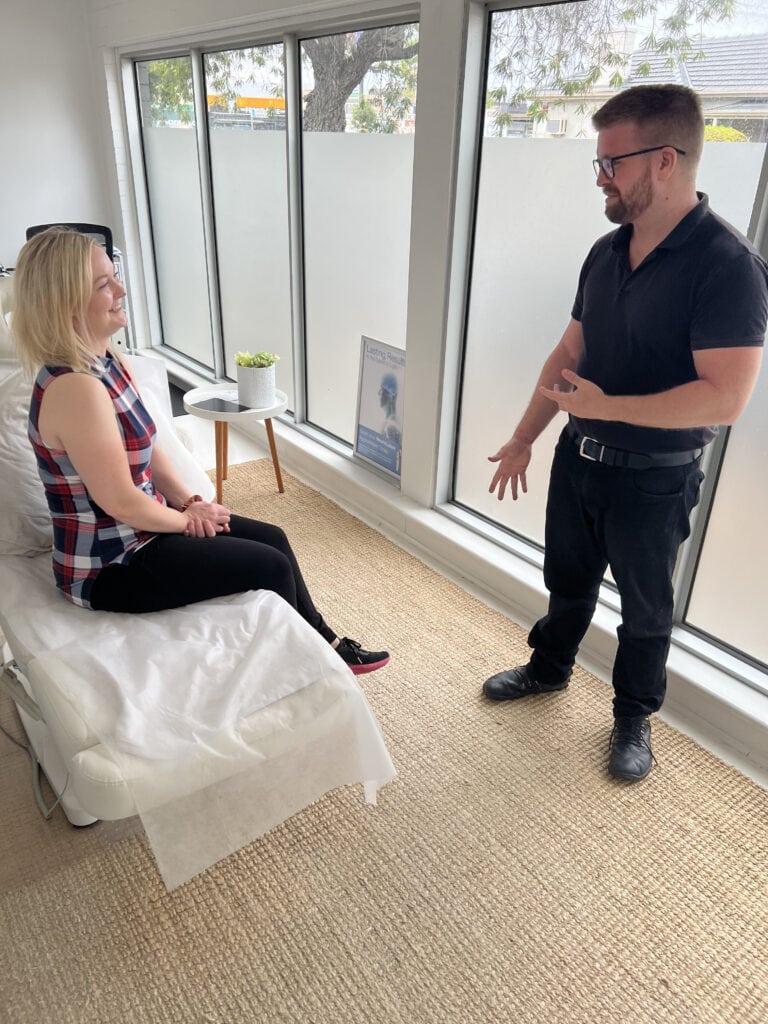
You Tell Us
We listen carefully, ask the right questions, and build a clear picture of what has been going on.
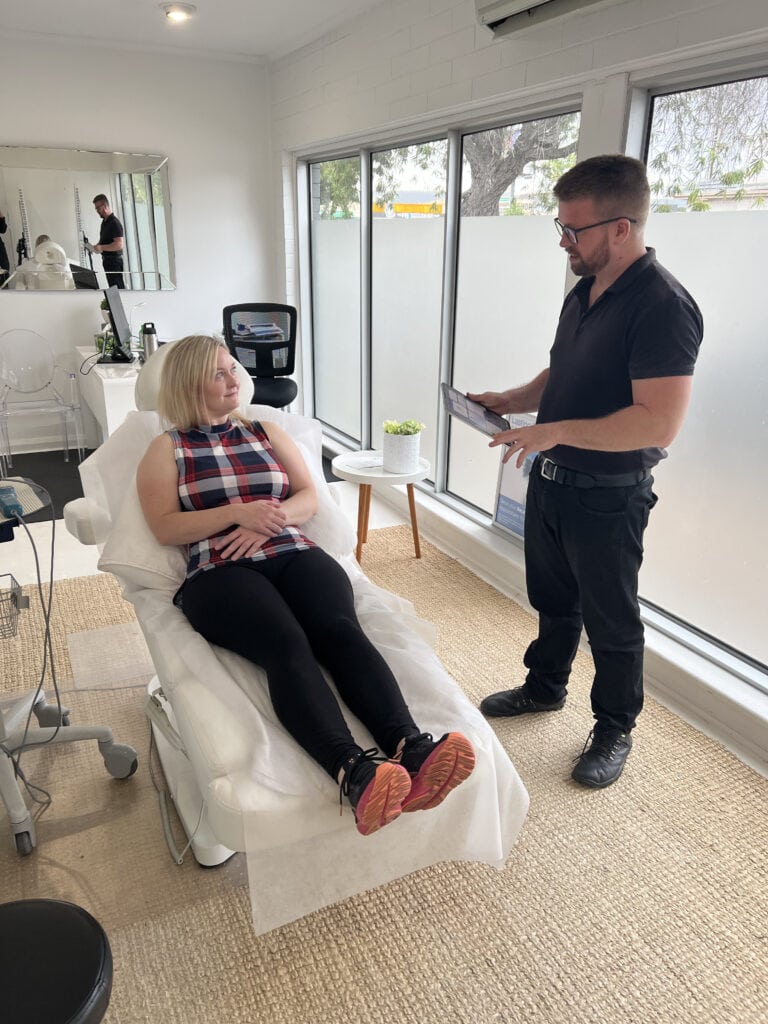
We Assess
Hands-on testing and biostructural analysis to identify what may be contributing to your concern.
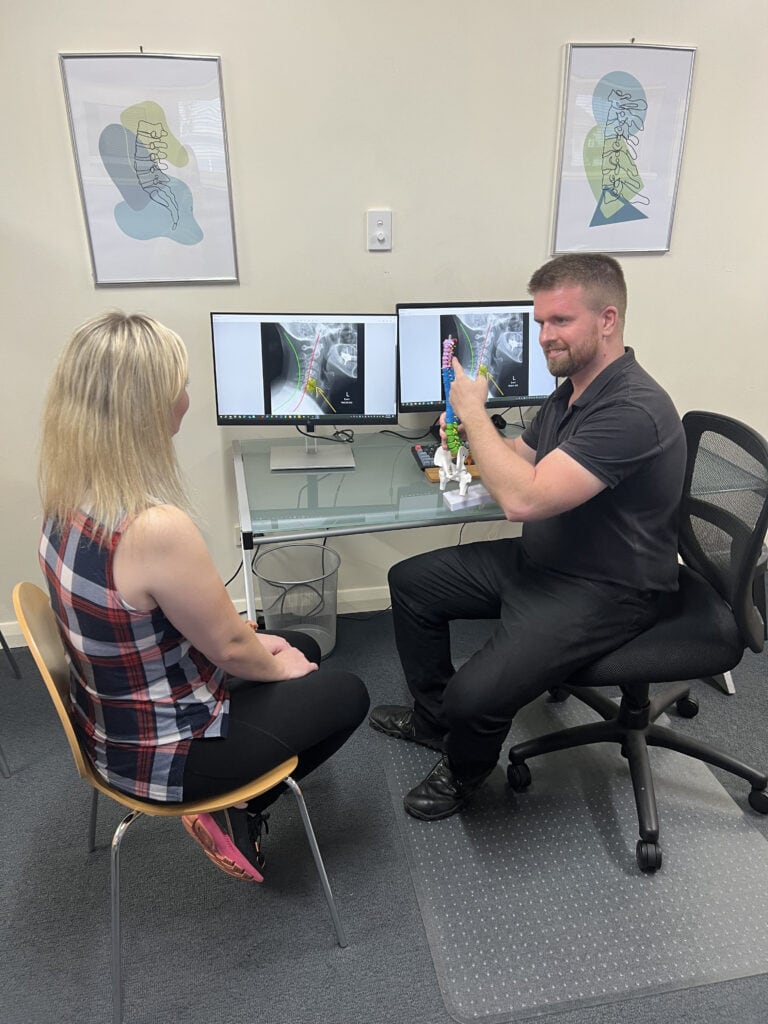
We Explain
We walk you through our findings and your options in plain language. If imaging is recommended, we will explain why and discuss your options.
X-rays are only referred for with your consent, and where eligible, may be bulk billed.*
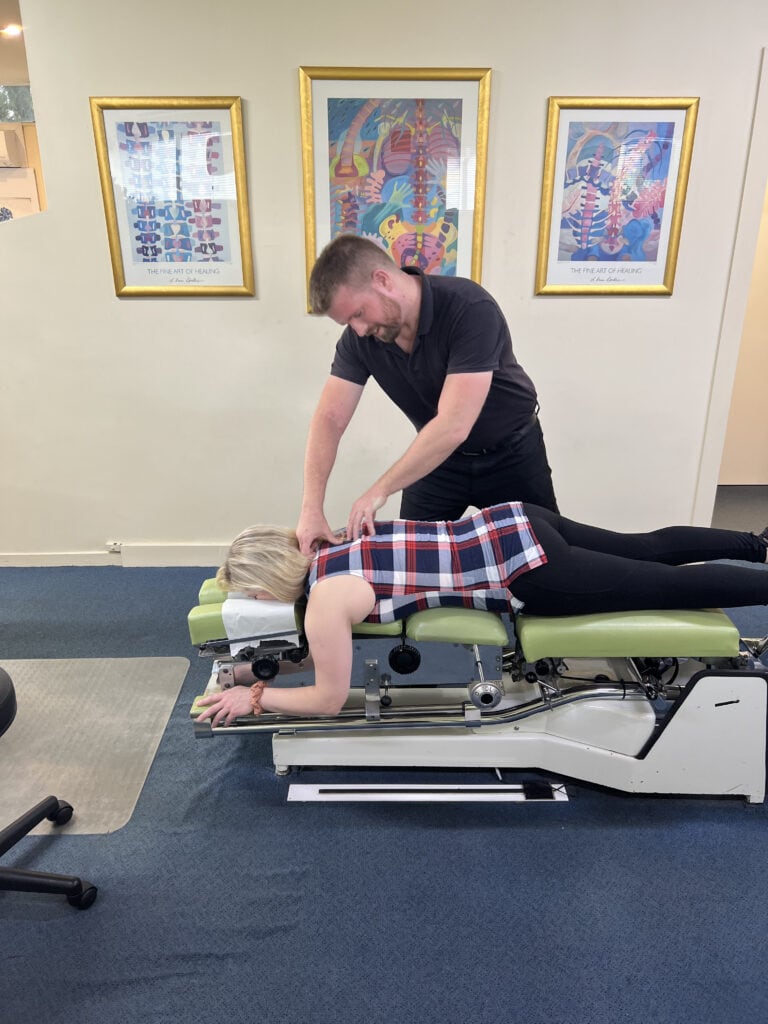
Care May Begin
Where clinically appropriate, care may begin on your first visit to help support relief.*
We offer both traditional hands-on chiropractic techniques and gentle, low-force approaches, tailored to your comfort. Care only proceeds with your consent.
Ready to Get Started?
Your first visit takes about 30 minutes. No referral needed, no lock-in plans. The decision is always yours.
Book Your First Visit*Subject to clinical assessment and suitability criteria. Bulk billing subject to eligibility criteria and clinical need.
Transparent, Affordable Fees
Source: Australian Chiropractors Association Consultation Fee Survey 2025 (SA data). *Care provided where clinically appropriate, subject to assessment.
Care that fits your day
528 Marion Road, Plympton Park SA 5038
Ready to Get Started? We're Ready When You Are.
Choose a time that works for you. No referral needed.

Dr Sam Johnson (Chiropractor)
B.Sc.(Chiro), M.Chiro.(Macq)
$69
Initial Consultation
Up to 30 minutes, including full assessment
Book Your First VisitPrefer to call? (08) 8297 5277
Text: 0400 105 454 | Email: wecanhelp@stapletonchiropractic.com.au
You will receive a confirmation email with all details immediately after booking.