How a contoured pillow may help support your neck
Considering that we spend up to a third of our lives sleeping, your choice of a pillow is an important decision.
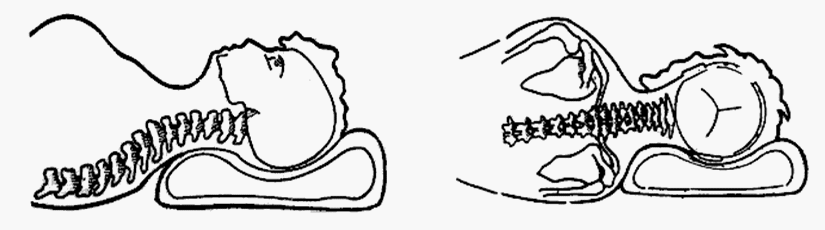
A common contributor to neck pain (and disturbed nights) may be “prolonged abnormal posture during sleep”. A soft filled pillow that quickly loses its shape fails to offer the level of support required to relax the heads support system of neck muscles and ligaments. Instead, these structures may be left unsupported, which may contribute to neck strain.
Maintaining good spinal posture, especially when sleeping, is one key ingredient to supporting good spinal posture.
Contoured pillows are specially shaped to provide support for the neck and head whilst sleeping. This is particularly important when having chiropractic care as it helps to support your comfort between visits.
Symptoms that may be associated with poor pillow support include:
headaches/migraine, neck pain, grinding noises on movement, pins and needles and numbness or pain in the arms and/or fingers
Advice for a goods nights sleep on your new pillow

- Like a new pair of shoes, your new pillow needs to be worn in.
- Use your pillow at the beginning of each night.
- If you experience any discomfort, change to your old pillow.
- Continue to do this until your neck posture alters enough allowing continual use.
- In some cases this can take up to 2 weeks.
This information is general in nature and is not a substitute for individual advice. All care is provided subject to clinical assessment and individual suitability, and individual responses vary.