Neck Pain Chiropractor in Adelaide


If neck pain has been affecting your workday, driving, or how you sleep, you are not alone. I have spent over 10 years at Stapleton Chiropractic assessing patients whose neck pain has quietly been limiting daily tasks like working at a screen, driving long distances, reaching overhead, and sleeping through the night. Many are worried it may be structural and are unsure whether conservative care can help or whether they need imaging or a GP opinion. A clear assessment is the fastest way to tell.
My priority when you walk in is simple: help you feel better. From there, I take the time to explain what I am finding, what may be contributing, and what your options look like. Then the decision is yours. I will map out the path, but you are always in control.
I completed my Bachelor of Chiropractic Science and Master of Chiropractic at Macquarie University in Sydney. I work with people across all ages and walks of life, and I am as happy to co-manage your care with your GP as I am to refer on if something else suits you better.
If you have any questions, feel free to get in touch with our friendly team. I look forward to helping you with your neck pain.
Dr Sam Johnson (Chiropractor)
Principal Chiropractor, Stapleton Chiropractic
That stiffness when you turn to check your mirrors. The ache that builds as the day goes on. The tension that creeps from your neck into your jaw or behind your eyes. Neck pain is one of the most common presentations we assess in Adelaide. At Stapleton Chiropractic, we start with a thorough hands-on assessment of your neck, upper back, and shoulders, explain what we find in plain language, and discuss your options.
Does this sound familiar?
Neck pain often involves the cervical spine, surrounding muscles, and postural and sleep contributors. At Stapleton Chiropractic in Adelaide (Est. 1972), a neck assessment is $69 and includes a hands-on examination of your cervical spine, upper back, and shoulders, plus a screen for red flags and postural drivers.
Tap the one that feels most like what you are dealing with.
Pain behind your eyes or at the base of your skull after screen time
Desk work, back-to-back meetings, a late-afternoon build-up that eases on weekends.
Waking up stiff and sore — pillow, or something deeper?
Morning stiffness that eases as the day goes on. You keep trying new pillows; nothing quite fixes it.
Sharp pain when checking your blind spot or reversing
Turning your head triggers a catch or stabbing pain. You start compensating with your whole body.
A dull ache that has been there so long you have started to just live with it
Months, maybe years. It has become background noise. Every now and then it flares.
You are not imagining it, and you are far from alone. Research suggests that nearly 1 in 2 Australian office workers develop a new episode of neck pain within a single year.[2] It is one of the most common reasons adults seek help from a chiropractor in Adelaide.
The good news? Most neck pain may respond well to conservative care when the underlying cause is properly identified. That is exactly where we start: a thorough hands-on assessment of your cervical spine, posture, and movement to understand what is actually going on before we discuss any options. Individual responses vary, but a clear starting point makes all the difference.
*All care is provided subject to clinical assessment and individual suitability. The information above is general and does not constitute a medical diagnosis.
What to Expect at Your First Visit
Your first visit is a 30-minute consultation costing $69. It includes a thorough hands-on assessment of your neck, a plain-language explanation of findings, and treatment on the same day where clinically appropriate. No referral is needed, and the decision about care is always yours.
Allow up to 30 minutes for a comprehensive initial consultation. Here is how it works.
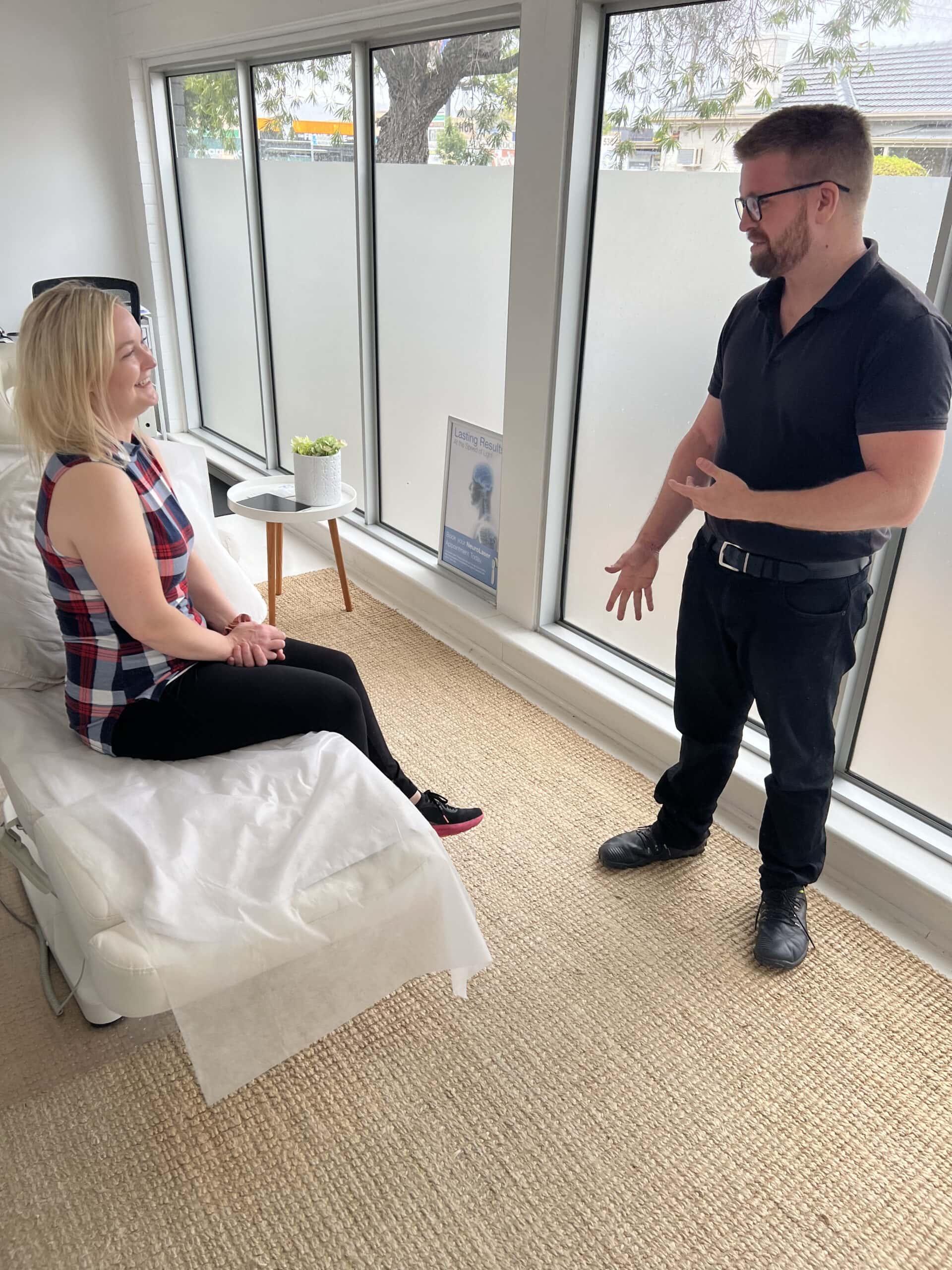
You Tell Us
We listen carefully, ask the right questions, and build a clear picture of what has been going on with your neck.
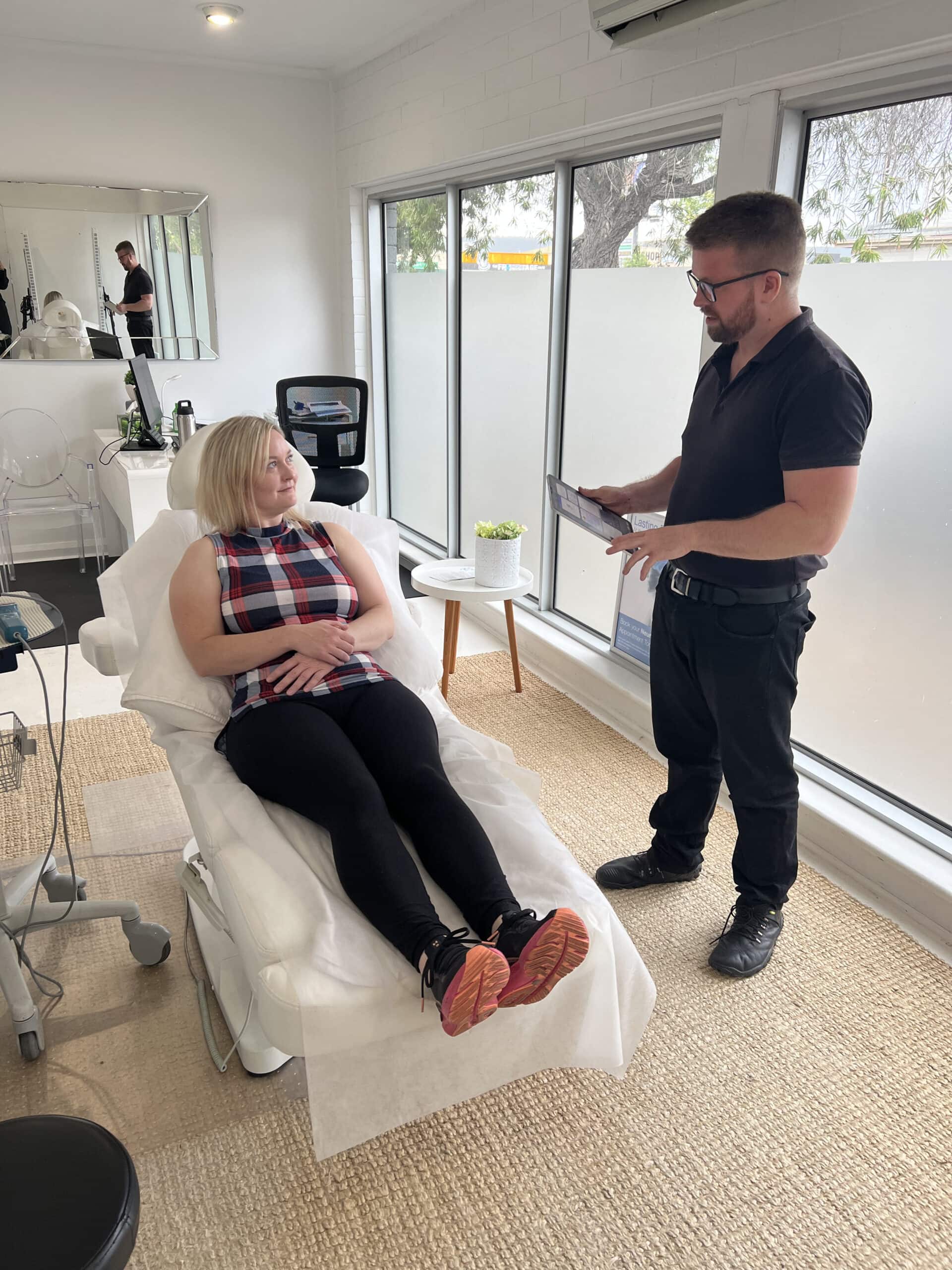
We Assess
Hands-on testing and biostructural analysis to identify what may be contributing to your neck pain or stiffness.
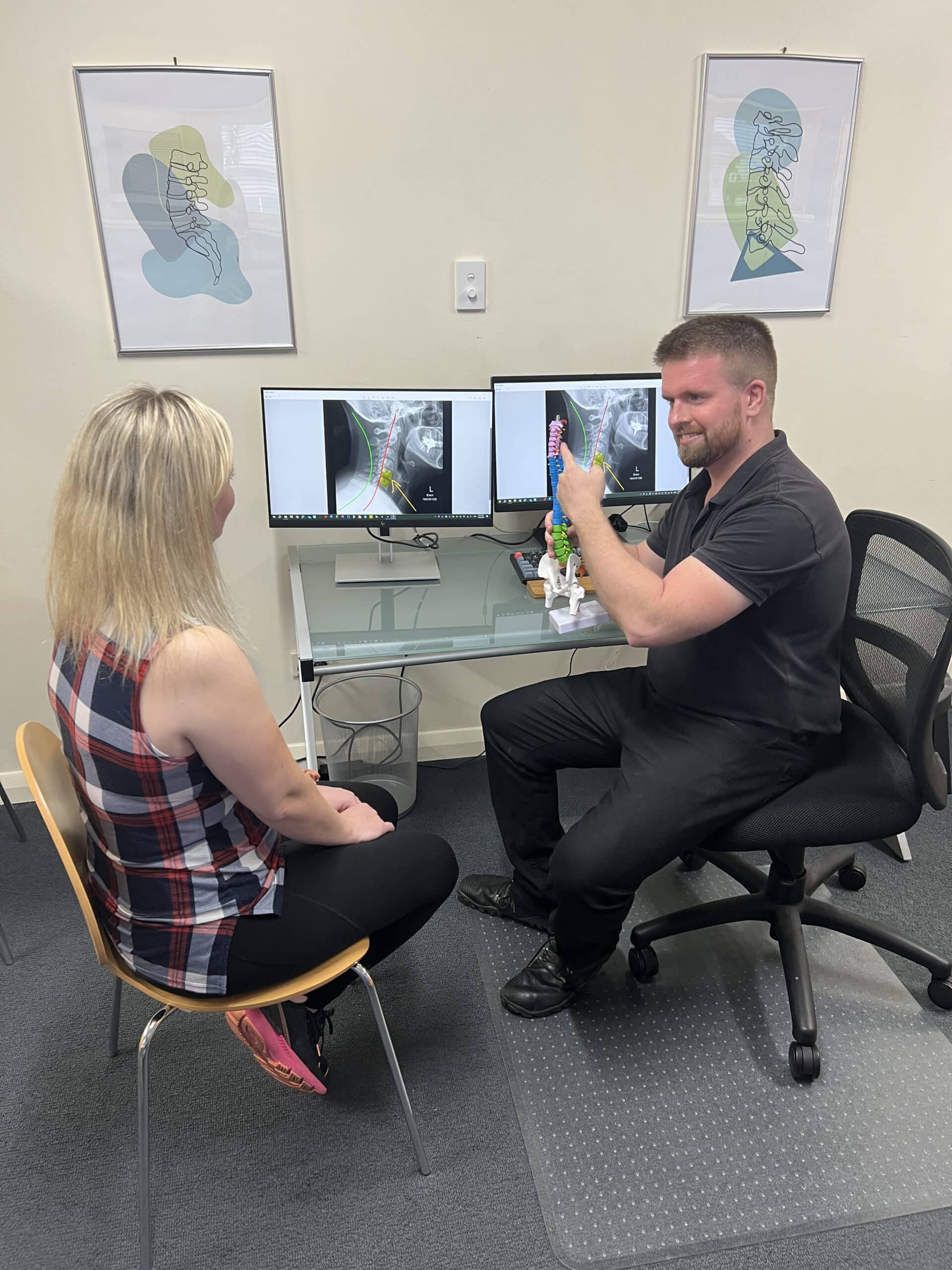
We Explain
We walk you through our findings and your options in plain language. If imaging is recommended, we will explain why and discuss your options.
X-rays are only taken with your agreement, and where eligible, may be bulk billed.*
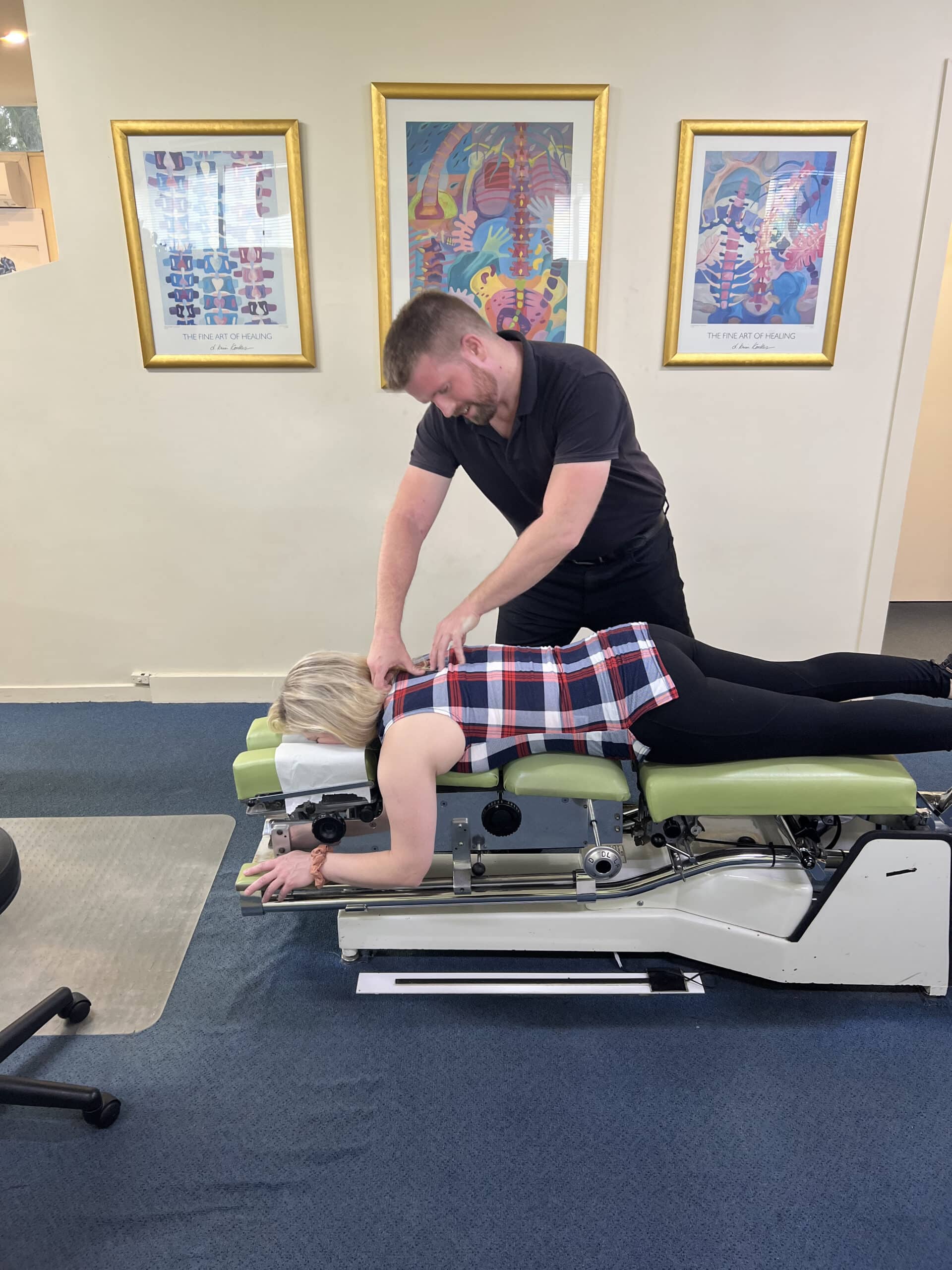
Care May Begin
Where clinically appropriate, care may begin on your first visit to help support relief.*
We offer both traditional hands-on chiropractic techniques and gentle, low-force approaches, tailored to your comfort. Care only proceeds with your consent.
Ready to Get Started?
Your first visit takes about 30 minutes. No referral needed, no lock-in plans. The decision is always yours.
Book Your First Visit*Subject to clinical assessment and suitability criteria. Bulk billing subject to eligibility criteria and clinical need.
How much does a chiropractor for neck pain cost in Adelaide?
Your first visit is over 40% below the South Australian average.
Source: Australian Chiropractors Association Consultation Fee Survey 2025 (SA data).
What causes neck pain?
Neck pain is most commonly caused by mechanical dysfunction in the joints, muscles, or discs of the cervical spine. Poor posture, prolonged desk work, smartphone use, stress, and acute injuries like whiplash are the leading triggers in working-age adults. Most neck pain may respond well to conservative care when the underlying cause is properly identified.
The cervical spine is made up of seven vertebrae, along with discs, joints, muscles, ligaments, and nerves that all work together to support your head and allow movement. When any of these structures are not functioning properly, pain and stiffness can develop.
Common contributing factors include:
- Cervical facet joint dysfunction (restricted or irritated joints in the neck)
- Muscle tension and strain (often from sustained postures or stress)
- Cervical disc issues (bulges, herniations, degeneration)
- Whiplash-associated disorders (from car accidents, falls, or impacts)
- Text neck and device-related strain (research suggests 64.6% of smartphone users report neck pain)[4]
- Poor workstation ergonomics and prolonged sitting
- Psychological stress and jaw clenching
- Sleep position and pillow issues
Who gets neck pain?
Neck pain affects people across all ages, though it peaks between 45 and 74 years. Women have a higher prevalence than men.[3] In Adelaide, we commonly see these groups:
Tap the one that sounds like you.
Office & Desk Workers
Screen time, forward head posture, ergonomics
Tradies & Physical Workers
Overhead work, vibration, heavy lifting
Nurses & Shift Workers
Patient handling, looking down, long shifts
Busy Parents
Breastfeeding posture, carrying, looking down
Drivers
Fixed posture, vibration, checking mirrors
Device & Screen Users
Text neck, gaming, scrolling posture
What conditions can present with neck pain?
Neck pain is often connected to other areas. Tap to learn more.
Headaches & Migraines
Tension, cervicogenic, recurring
Referred Pain
Shoulder, arm, or hand symptoms
Cervical Disc Issues
Bulges, herniations, degeneration
Whiplash
Post-accident neck injury
Thoracic Outlet Syndrome
Compression, tingling, numbness
Cervical Arthritis
Stiffness, degeneration, age-related
Jaw (TMJ) Dysfunction
Clenching, clicking, facial pain
When to seek urgent care for neck pain
*General information only — not a substitute for medical advice
Most neck pain is not caused by serious medical conditions, but some warning signs warrant prompt medical assessment. If any of the features below apply, contact your GP, call healthdirect on 1800 022 222, or call 000 for urgent symptoms.
Sudden severe neck pain with neurological symptoms
Sudden severe neck pain or headache combined with dizziness, visual changes, difficulty speaking, facial drooping, or unsteadiness needs urgent medical assessment. This is a medical emergency.
Walking, balance, or hand coordination changes
Unsteady walking, hand clumsiness (difficulty with buttons or fine motor tasks), bilateral arm symptoms (numbness or weakness in both arms), or new bladder or bowel changes warrant prompt medical assessment.
Progressive neurological weakness
Increasing weakness, numbness, or tingling in the arms, hands, or legs that is getting worse rather than better needs medical review.
Neck pain after significant trauma
Following a car accident, fall from height, or impact, particularly if you are unable to turn your head or have numbness or tingling, seek prompt medical assessment.
Systemic warning signs
Unexplained weight loss, fever, severe night pain that wakes you from sleep, or a history of cancer combined with new neck pain needs GP review to exclude other causes.
Call 000 immediately if you experience sudden severe neck pain with neurological symptoms (dizziness, visual changes, difficulty speaking), saddle numbness with bladder or bowel changes, or rapidly progressive limb weakness. Do not wait for a routine appointment.
Your first visit at Stapleton Chiropractic includes a detailed neck pain history. If anything in your presentation suggests you should be assessed by a GP or medical services before starting chiropractic care, we'll tell you and support referral.
The health and wellbeing of you, your family, and your friends is our priority.
💚
Can neck problems cause headaches?
Yes. The upper cervical spine (C1–C3) shares nerve pathways with the trigeminal nerve, which supplies sensation to the head and face. Cervicogenic headaches, caused by dysfunction in the neck, may account for 15–20% of all headaches and are frequently underdiagnosed.
Your neck and your headaches may be more connected than you think. The upper cervical spine — specifically the C1, C2, and C3 vertebrae — shares nerve pathways with the trigeminal nerve, which supplies sensation to your head, face, and jaw. When the joints or muscles of your upper neck are restricted or not functioning properly, they can refer pain into the head, temples, behind the eyes, or across the forehead.
These are called cervicogenic headaches, and research suggests they may account for 15 to 20% of all headaches. Many people who have been managing recurring headaches for years have never had their neck properly assessed as a potential contributing factor.
At Stapleton Chiropractic, assessing the relationship between your neck and headaches is a standard part of our evaluation. If cervical spine dysfunction is identified as a likely contributor, chiropractic care — including manual therapy and targeted exercises — may help manage your symptoms. A 2002 randomised controlled trial published in Spine found that manipulation and exercise produced sustained improvement in cervicogenic headache frequency and intensity.
If you experience headaches alongside your neck pain, or headaches that seem to start at the base of your skull, an assessment may help identify whether your neck is a contributing factor. Read more about how we assess headaches and migraines →
How may chiropractic care help with neck pain?
Chiropractic care addresses neck pain by assessing and restoring mechanical function in the cervical spine. A Cochrane review of 27 randomised controlled trials found that multimodal care combining manual therapy with exercise is beneficial for neck disorders (Gross et al., 2010). Treatment may include spinal manipulation, mobilisation, soft tissue techniques, and targeted exercises tailored to your individual presentation.
Chiropractic care focuses on assessing and managing the mechanical function of your spine and surrounding structures. For neck pain, this means identifying which joints are restricted, which muscles are overworking, and what postural or lifestyle factors may be contributing to your symptoms. The approach is hands-on, evidence-informed, and tailored to your individual presentation.
Your initial assessment
Your first visit at Stapleton Chiropractic involves a thorough assessment of your cervical spine, upper thoracic spine, and surrounding muscles. We assess your range of motion, joint function, posture, and neurological status. If imaging is clinically indicated, we can refer for X-rays (which may be bulk billed where eligible) and will explain our reasoning before proceeding. The goal is to build a clear picture of what may be driving your neck pain so we can discuss your options with you in plain language.
Tailored management approaches
Based on your assessment findings, a management plan may include spinal manipulation or mobilisation to address restricted joints, soft tissue techniques to manage muscle tension, and specific exercises to support your recovery and reduce the likelihood of recurrence. Research supports multimodal care — combining manual therapy with exercise — as an effective approach for neck pain management. A Cochrane review of 27 randomised controlled trials found strong evidence for this combined approach in subacute and chronic mechanical neck disorders. Where relevant, we also provide practical advice on ergonomics, sleeping position, and workstation setup.
Gentle and low-force options available
Not everyone is comfortable with traditional manual adjustments, and that is completely fine. We offer a range of gentle, low-force techniques including instrument-assisted adjustments and mobilisation approaches that are suitable for people who prefer a softer approach, or for presentations where traditional manipulation may not be appropriate. We discuss your options before any care begins, and nothing proceeds without your consent. The approach is always guided by what is clinically appropriate and what you are comfortable with.
Comparing your options for neck pain
| Chiropractic | Physiotherapy | Cold Laser Therapy | |
|---|---|---|---|
| Primary focus | Spinal joint function, alignment, and nervous system involvement | Exercise rehabilitation, soft tissue approaches, movement retraining | Soft tissue healing, inflammation reduction, and pain management at a cellular level |
| Common techniques | Spinal manipulation, mobilisation, instrument-assisted adjustments | Therapeutic exercise, dry needling, manual therapy | Photobiomodulation (targeted light energy applied directly to affected tissue) |
| Evidence for neck pain | Cochrane review: manipulation + exercise beneficial for subacute/chronic neck disorders | Cochrane review: exercise programs effective for chronic neck pain | Lancet systematic review: LLLT reduces pain in acute and chronic neck pain (16 RCTs, 820 patients) |
| Referral needed? | No. Primary contact practitioner | No. Primary contact practitioner | No. Available here at Stapleton Chiropractic |
| Typical at Stapleton | Thorough spinal assessment, manual therapy, exercise prescription, ergonomic advice | N/A (we can refer if physiotherapy is more appropriate for your presentation) | Multi-Radiance MR5 ACTIV PRO device, targeted to the affected area alongside your chiropractic care |
| When to consider | Joint restriction, stiffness, cervicogenic headaches, postural dysfunction | Post-surgical rehab, sport-specific rehab, primarily muscle-based presentation | Soft tissue inflammation, persistent muscle tension, chronic pain, or when a gentle non-manual approach is preferred |
Why this matters for you: Not all neck pain is the same. Some presentations are primarily joint-based, some are more soft tissue or inflammatory, and many are a combination. At Stapleton Chiropractic, we offer both chiropractic care and cold laser therapy under the one roof, which means Dr Sam can assess your presentation and discuss which approach, or combination, may be most appropriate for you.
If we believe you would benefit from a different type of care entirely, we will always let you know and can refer you to a suitable practitioner. Our priority is the right care for your situation. We have built our reputation over 50 years on this honest, transparent approach, and we believe you deserve to know you are in the right hands from the start.
Interested in whether cold laser therapy may be appropriate for your neck pain? Simply mention it during your initial consultation with Dr Sam, or book your first visit and he will assess which approach suits your presentation best.
*All care is provided subject to clinical assessment and individual suitability. Individual responses to treatment vary.
What does the evidence say about chiropractic care for neck pain?
Multiple systematic reviews and clinical practice guidelines support chiropractic manual therapy as part of a multimodal approach to neck pain. The strongest evidence exists for combining spinal manipulation or mobilisation with exercise for subacute and chronic mechanical neck disorders.
Chiropractic care is one of the most commonly sought treatments for neck pain. Multiple systematic reviews and clinical practice guidelines support manual therapy, including spinal manipulation and mobilisation, as part of a multimodal approach to neck pain management.
27 Randomised Controlled Trials: Cervical Manipulation and Mobilisation
A Cochrane review of 27 RCTs found moderate-quality evidence that cervical manipulation and mobilisation produce similar effects on pain, function, and patient satisfaction. Strong evidence supports multimodal care (manipulation combined with exercise) for subacute and chronic mechanical neck disorders.[6]
Spinal Manipulation vs Medication: 272 Participants
A randomised controlled trial of 272 participants published in the Annals of Internal Medicine found that spinal manipulative therapy had a statistically significant advantage over medication in both short-term and long-term pain reduction for neck pain.[7]
Clinical Practice Guidelines: Neck Pain
The Journal of Orthopaedic and Sports Physical Therapy clinical practice guidelines recommend thoracic manipulation, cervical manipulation and mobilisation, neck range of motion exercises, and strengthening for acute, subacute, and chronic neck pain.[8]
552 Studies Reviewed: Activity-Based Approaches
A comprehensive review of 552 studies found that treatments emphasising activity and return to function are more beneficial than passive approaches for neck pain. Exercises and mobilisation provide short-term relief for Grade I and II neck pain.[9]
*All care is provided subject to clinical assessment and individual suitability. Individual responses to treatment vary.
What the research says
“There is moderate quality evidence that cervical manipulation and mobilisation produced similar changes. Either as a stand-alone intervention or combined with exercise, manipulation and mobilisation were beneficial for pain, function, and patient satisfaction for subacute and chronic mechanical neck disorders.”
— Cochrane Database of Systematic Reviews, Gross et al., 2010 (27 RCTs)
“Low-level laser therapy reduces pain immediately after treatment in acute neck pain and up to 22 weeks after completion of treatment in patients with chronic neck pain.”
— The Lancet, Chow et al., 2009 (systematic review, 16 RCTs, 820 patients)
“Back problems, including neck pain, are one of the leading causes of disability in Australia, affecting an estimated 4.0 million Australians.”
— Australian Institute of Health and Welfare, Back Problems Report, 2023
Cold laser therapy for neck pain
In addition to chiropractic care, we offer cold laser therapy (photobiomodulation) as a non-invasive option for neck pain. This is the condition with the strongest evidence base for cold laser.
A landmark systematic review published in The Lancet (Chow et al. 2009) analysed 16 RCTs involving 820 patients and found that low-level laser therapy significantly reduced pain immediately after treatment in acute neck pain and for up to 22 weeks in chronic neck pain. The relative risk for pain improvement in chronic neck pain was 4.05, meaning patients receiving LLLT were approximately four times more likely to improve than those receiving placebo.[10]
A Cochrane Cervical Overview Group review (Gross et al. 2013) of 17 trials found moderate-quality evidence supporting LLLT over placebo for chronic neck pain.[11] A 2022 meta-analysis of 13 RCTs involving 556 patients with myofascial neck pain also found LLLT significantly effective in pain reduction.[12]
Interested in cold laser for your neck pain?
Ask Dr Sam about cold laser during your initial chiropractic consultation. He can assess whether photobiomodulation may be appropriate for your presentation and explain how the two approaches can work together. Book your assessment
*All care is provided subject to clinical assessment and individual suitability. Individual responses to treatment vary.
Why choose Stapleton Chiropractic for neck pain?
Over 50 Years of Trusted Care
Stapleton Chiropractic has been part of the Plympton Park community since 1972. That is over 50 years of continuous operation supporting Adelaide families with their musculoskeletal health. We have seen how chiropractic care has evolved over five decades and we apply that experience to every patient we see.
Qualified, Registered, and Experienced
Dr Sam Johnson (Chiropractor) holds a Bachelor of Chiropractic Science and Master of Chiropractic from Macquarie University. He is registered with AHPRA and is a member of the Australian Chiropractors Association. Dr Johnson has been with the practice for over 10 years and became Principal Chiropractor in 2021.
Hours, Parking, and Pricing That Work
We are open 7am to 7pm weekdays and Saturday mornings, designed to fit around your work schedule. Free on-site parking. Your initial consultation is $69, well below the South Australian average of $122. All major private health funds accepted. No lock-in plans, no referral required.
Your Care, Your Choice
Whether you are looking for relief now or relief plus answers, your goals are our goals. We respect your autonomy at every step. No commitment to ongoing care, no lock-in plans. Where clinically appropriate, treatment may begin on your first visit.*
*Subject to clinical assessment and individual suitability.
Dr Sam (Chiropractor) explains: your neck pain questions answered
Common questions from patients and from people searching online, answered by Dr Sam Johnson (Chiropractor).
Your first visit (initial consultation) is $69, which includes a thorough assessment and, where clinically appropriate, treatment on the same day. Standard visits after that are $60. That is well below the South Australian average of $122 for an initial consultation (ACA Fee Survey 2025).
No lock-in plans, no pressure. If you have prepaid for sessions you do not end up using, we refund them in full. Most private health funds cover part of the cost, and we provide receipts you can claim via your fund's app. See our full pricing and health fund guide for details.
Your first visit takes about 30 minutes. We start by listening to what has been going on with your neck, then conduct a thorough hands-on assessment of your movement, posture, and joint function. We explain what we find in plain language and discuss your options.
Where clinically appropriate, care may begin on the same visit. You are in control the whole time, and no treatment proceeds without your consent. No referral is needed to book. Learn more about what to expect at your first visit.
We accept all private health funds. After your visit, we provide a receipt that you can use to claim your rebate through your fund's app or member portal. The process takes most people under a minute.
We do not have an on-the-spot claiming terminal, but patients tell us the app-based process is just as fast. If you are unsure about your level of cover, we recommend checking with your fund before your visit.
No. You do not need a referral from a GP or anyone else to see a chiropractor. You can book directly. Chiropractors are primary contact practitioners, which means you can come straight to us without needing to see anyone else first.
If at any point we feel your condition would benefit from additional investigation or a different type of care, we will always let you know and help point you in the right direction.
Self-manipulation of the neck, where you forcefully twist or crack your own neck, is different from a controlled chiropractic adjustment. Repeated forceful self-manipulation is not recommended because it tends to target the segments that already move too much rather than the ones that are restricted.
A chiropractic adjustment is a precise, controlled technique applied to specific joints that are not moving properly. If you feel the urge to crack your neck frequently, it may be a sign that certain joints are restricted and compensating. An assessment can help identify what may be driving that feeling.
Yes. There is a strong connection between cervical spine dysfunction and headaches. The upper cervical spine (C1 to C3) shares nerve pathways with the trigeminal nerve, which supplies sensation to the head and face. When the joints or muscles of the upper neck are not functioning properly, they can refer pain into the head.
These are called cervicogenic headaches and research suggests they may account for 15 to 20% of all headaches. At Stapleton Chiropractic, assessing the relationship between your neck and headaches is a standard part of our evaluation. You can also read more on our headaches and migraines page.
Sustained forward head posture while using a phone places significant load on the cervical spine. Research suggests that 64.6% of smartphone users report neck pain. While it may not be realistic to stop using your phone entirely, there are practical strategies that may help.
Taking regular breaks, holding the device at eye level rather than looking down, and incorporating neck stretches and postural exercises into your routine can all make a difference. We can provide specific recommendations based on your individual assessment.
Your pillow can play a role in neck pain, particularly if you wake with stiffness or pain that eases as the day goes on. A pillow that maintains a neutral spine position, keeping your head aligned with your body, may help reduce morning stiffness.
The ideal pillow depends on your sleeping position. Side sleepers generally need a firmer, higher pillow, while back sleepers may do better with a lower profile. We can provide guidance on pillow selection based on your sleeping position and cervical spine assessment.
Clicking, popping, or crunching sounds in the neck are common and often not a cause for concern. The sounds can come from gas bubbles releasing in the synovial fluid of joints (cavitation), tendons or ligaments moving over bony structures, or joint surface changes.
However, if the clicking is accompanied by pain, locking, catching, or neurological symptoms such as numbness or tingling in the arms or hands, it warrants an assessment to rule out anything that may need attention.
Most episodes of acute neck pain improve significantly within a few days to a few weeks with appropriate care. However, neck pain can become recurrent or chronic if underlying contributing factors are not addressed.
Research suggests that approximately 50 to 85% of people who experience neck pain will report it again one to five years later. A thorough assessment can help identify what may be contributing to your neck pain and guide a management plan aimed at reducing both the current episode and the likelihood of recurrence.
Both chiropractors and physiotherapists are qualified to assess and manage neck pain. Chiropractors focus primarily on spinal joint function, alignment, and nervous system involvement. Physiotherapists may focus more on exercise rehabilitation and soft tissue approaches. Both approaches are supported by evidence.
A Cochrane review of 27 randomised controlled trials found that multimodal care combining manual therapy with exercise is beneficial for neck disorders. At Stapleton Chiropractic, if we assess your condition and feel you would benefit from a different approach, we will always let you know.
Yes. Psychological stress is a well-established contributing factor for neck pain. Research from the University of Sydney found that high stress was a significant predictor of new neck pain in office workers. Stress causes sustained muscle tension, particularly through the neck, shoulders, and jaw, which may lead to pain, stiffness, and restricted movement over time.
While we cannot remove the stress from your life, we can assess and address the physical consequences it has on your cervical spine and surrounding muscles. By supporting how your neck functions mechanically, we aim to help manage the physical effects that stress may have on your body.
A calm, confident approach to your care


Continuing Stapleton Chiropractic's 50-year legacy of trusted care in Adelaide's south. We listen first, explain clearly, and focus on what matters most to you.
I've been at Stapleton Chiropractic for over 10 years and have had the privilege of helping thousands of patients along the way. I became the Principal Chiropractor here in 2021, and it's a role I genuinely love. This clinic has been part of the Plympton Park community for over 50 years, and carrying that legacy forward is something I take real pride in.
My first priority when you walk through the door is simple: help you feel better and comfortable. From there, I'll take the time to help you understand what's actually going on, what's contributing to your problem, and what your options look like. Then the decision is yours. I'll map out the path, but you're always in control of how you want to move forward with your health.
I completed my Bachelor of Chiropractic Science and Master of Chiropractic at Macquarie University in Sydney. I work with people across all ages and walks of life, from tradies and office workers to new parents and retirees.
If you have any questions, feel free to get in touch with our friendly team. I look forward to helping you with your health. Book a time to see me →
Dr Sam Johnson (Chiropractor)
Principal Chiropractor, Stapleton Chiropractic
Where are you right now?
Choose the path that best describes where you are today.
Ready to Get Started? We're Ready When You Are.
Choose a time that works for you. No referral needed.

Dr Sam Johnson (Chiropractor)
B.Sc.(Chiro), M.Chiro.(Macq)
$69
Initial Consultation
Up to 30 minutes, including full assessment
Book Your First VisitPrefer to call? (08) 8297 5277
Text: 0400 105 454 | Email: wecanhelp@stapletonchiropractic.com.au
You will receive a confirmation email with all details immediately after booking.
What conditions are related to neck pain?
Neck pain is often connected to other areas. Explore these related concerns.
Still researching? Read about what to expect at your first visit, our fees and health fund coverage, or explore our chiropractic services.
View References (13 citations)
References
- Hogg-Johnson S et al. (2008). The burden and determinants of neck pain in the general population. Spine, 33(4S):S39-S51. Bone and Joint Decade 2000-2010 Task Force on Neck Pain. pubmed.ncbi.nlm.nih.gov
- Hush JM et al. (2009). Risk factors for neck pain in office workers: a prospective study. BMC Musculoskeletal Disorders. pmc.ncbi.nlm.nih.gov
- Global Burden of Disease Study 2021. Neck pain: global prevalence and projections to 2050. pmc.ncbi.nlm.nih.gov
- IASP (International Association for the Study of Pain). Text neck and device-related pain. iasp-pain.org
- Safe Work Australia. Work-related musculoskeletal disorders in Australia. safeworkaustralia.gov.au
- Gross A et al. (2010). Manipulation and mobilisation for mechanical neck disorders. Cochrane Database of Systematic Reviews. pubmed.ncbi.nlm.nih.gov
- Bronfort G et al. (2012). Spinal manipulation, medication, or home exercise with advice for acute and subacute neck pain. Annals of Internal Medicine, 156(1):1-10. pubmed.ncbi.nlm.nih.gov
- Blanpied PR et al. (2017). Neck pain: clinical practice guidelines. Journal of Orthopaedic and Sports Physical Therapy, 47(7):A1-A83. jospt.org
- Haldeman S et al. (2008). Bone and Joint Decade 2000-2010 Task Force on Neck Pain and Its Associated Disorders. Spine, 33(4S). pubmed.ncbi.nlm.nih.gov
- Chow RT et al. (2009). Efficacy of low-level laser therapy in the management of neck pain: a systematic review and meta-analysis. The Lancet, 374(9705):1897-1908. pubmed.ncbi.nlm.nih.gov
- Gross A et al. (2013). Cervical overview group: patient education, manual therapy, exercise. Cochrane Database of Systematic Reviews. pmc.ncbi.nlm.nih.gov
- Tehrani MHG et al. (2022). Low-level laser therapy for myofascial neck pain: a systematic review and meta-analysis. pubmed.ncbi.nlm.nih.gov
- Jull G et al. (2002). A randomized controlled trial of exercise and manipulative therapy for cervicogenic headache. Spine, 27(17):1835-1843. pubmed.ncbi.nlm.nih.gov
Dr Sam Johnson (Chiropractor)
BSc(Chiro), MChiro, Macquarie University
Member, Australian Chiropractors Association
Stapleton Chiropractic | Est. 1972
528 Marion Road, Plympton Park SA 5038
(08) 8297 5277 | wecanhelp@stapletonchiropractic.com.au
Mon–Fri 7am–7pm | Sat 8am–12pm
Last clinically reviewed: April 2026 by Dr Sam Johnson (Chiropractor), B.Sc.(Chiro), M.Chiro.(Macq), AHPRA Registered.

Lower-Force Options for Sensitive Necks
Many people with neck pain hesitate before booking chiropractic care, often picturing forceful manipulation as the only option. That hesitation is reasonable, particularly after a flare-up, after a recent whiplash event, or when osteoarthritis has made the joints more reactive. Lower-force approaches exist precisely for these presentations.
At Stapleton Chiropractic, gentle-technique options include the Activator (a small spring-loaded instrument that delivers a calibrated, low-force impulse), drop-piece adjusting (a table-assisted technique where a section of the table releases as a light contact is made), and manual joint mobilisation (slow, oscillatory movement within a comfortable range). These approaches avoid the rotation and sudden thrust that some patients find off-putting.
Research suggests that for many mechanical neck pain presentations, mobilisation-based and instrument-assisted techniques may produce outcomes broadly comparable to higher-velocity manual adjustment, particularly when paired with active rehabilitation. Some patients also find self-management exercise approaches (for example, the McKenzie-style directional preference exercises that physiotherapists often teach) helpful as a home complement. Stapleton does not deliver the McKenzie protocol itself, and exercise selection is always tailored to the individual.
Dr Sam Johnson (Chiropractor) will assess your neck during the initial consultation and discuss whether Activator, drop-piece, or manual mobilisation is the most suitable starting point for your presentation. The decision is always yours, and the technique mix can be adjusted over time as your response to care becomes clearer.
All care is provided subject to clinical assessment and individual suitability. Individual responses to treatment vary.